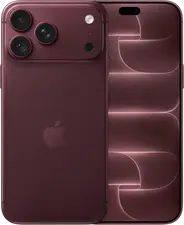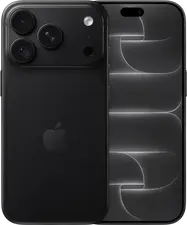
At the kitchen table, you answer a message, check a route across Chișinău and photograph a document before leaving. By evening, the same phone has handled calls, several videos and a long family conversation. A larger screen might have helped with some of that; a lighter phone might have made the rest more comfortable.
The Apple iPhone 18 Pro and Apple iPhone 18 Pro Max approach those everyday demands with the same core technology in different-sized bodies. Both offer the A20 Pro processor and a camera system with a variable-aperture main lens. Choosing between them means deciding how much screen and battery reserve you want to carry, then matching storage, accessories and the regional version to your life in Moldova.
iPhone 18 Pro and Pro Max: the differences that matter
The smaller Pro is the more manageable starting point if you frequently use your phone while standing, carry it in a trouser pocket or prefer a lighter device for long calls. The Pro Max makes more sense when your phone is also your main screen for reading, watching video or reviewing photographs. Neither choice requires you to abandon the shared headline camera features.
This comparison uses the battery ratings for the regional versions with nano-SIM and eSIM documented for Moldova. Imported versions should be checked separately.
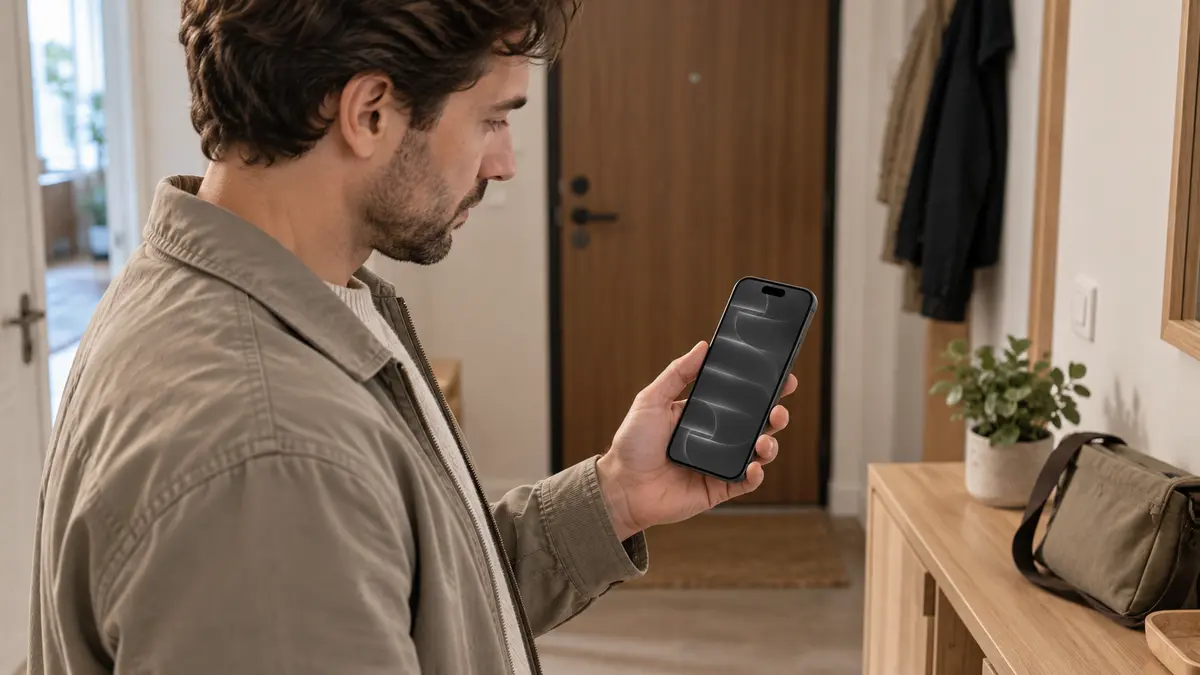
Characteristic | iPhone 18 Pro[Photo 1: An adult checking a smartphone before leaving a comfortable apartment, with a small everyday bag beside the entrance.] | iPhone 18 Pro Max |
|---|---|---|
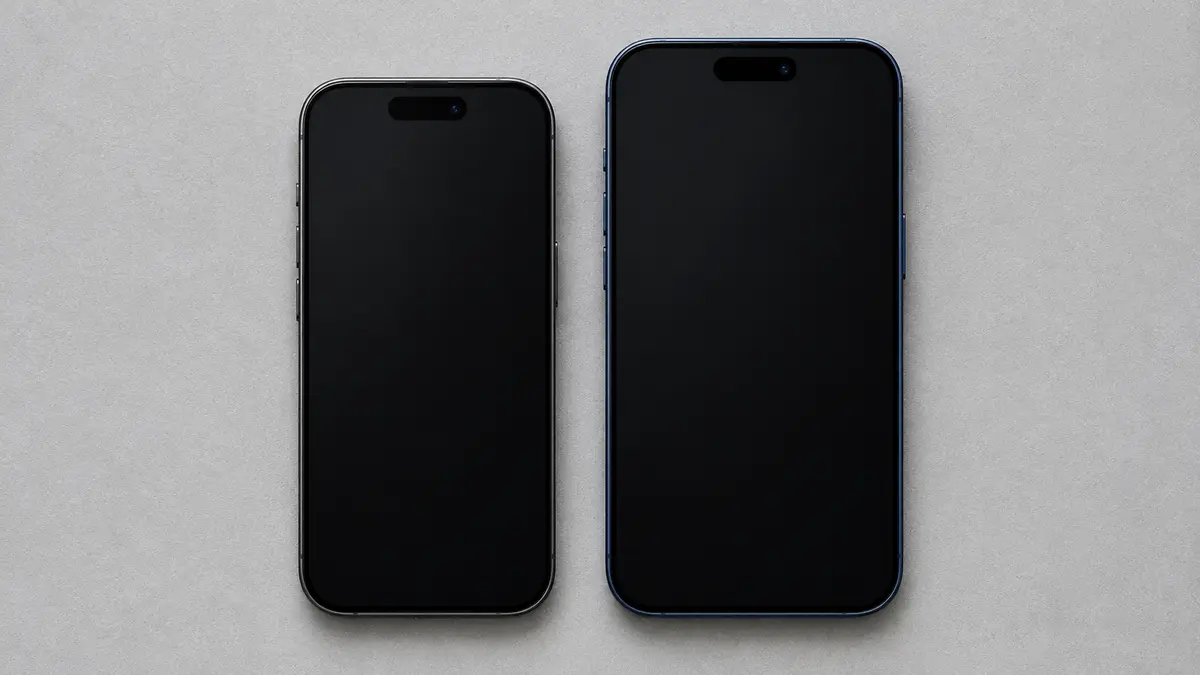
Advertised screen diagonal | 6.3 inches, about 16.0 cm | 6.9 inches, about 17.5 cm |
Body, height × width × depth | 150.0 × 71.9 × 8.75 mm | 163.4 × 78.0 × 8.75 mm |
Weight without a case | 211 g | 249 g |
Processor | A20 Pro | A20 Pro |
Rear cameras | 48 MP main, ultra-wide and 4× telephoto | 48 MP main, ultra-wide and 4× telephoto |
Storage options | 256 GB, 512 GB, 1 TB, 2 TB | 256 GB, 512 GB, 1 TB, 2 TB |
Rated video playback | Up to 34 hours | Up to 43 hours |
The screen sizes are advertised diagonals, with less usable area around the rounded corners. Battery figures describe controlled video-playback tests, not guaranteed time between charges. These numbers help compare the two models, but they do not replace trying the phones in your hand.
The Max is 6.1 mm wider and 38 g heavier. Those differences may look modest on paper, yet width affects how far your thumb must reach, while weight becomes noticeable when reading in bed or holding a phone through a video call. A protective case adds more bulk. Try reaching the opposite edge of the screen and putting the phone into the pocket you actually use.
A larger display gives you room to work
Both models use OLED displays, in which individual pixels produce their own light, and both have the same pixel density. The Max therefore gives you a larger viewing area rather than inherently sharper text. That extra room is useful when enlarging text, following a map or checking whether everyone looks right in a group photograph.
Both also offer ProMotion, an adaptive refresh rate reaching 120 Hz. This means the display can update up to 120 times each second, making scrolling and supported animations look smoother. The refresh rate can change with the content; the number does not mean every video becomes a 120-frame-per-second recording.
For someone who answers a few messages and puts the phone away, the smaller model may be easier to live with. Someone who regularly reads lengthy documents on the bus may welcome the Max. Before choosing, increase the text size to your preferred setting on each phone. A comfortable reading experience depends on both the screen and how you configure it.
The main camera upgrade is shared by both sizes
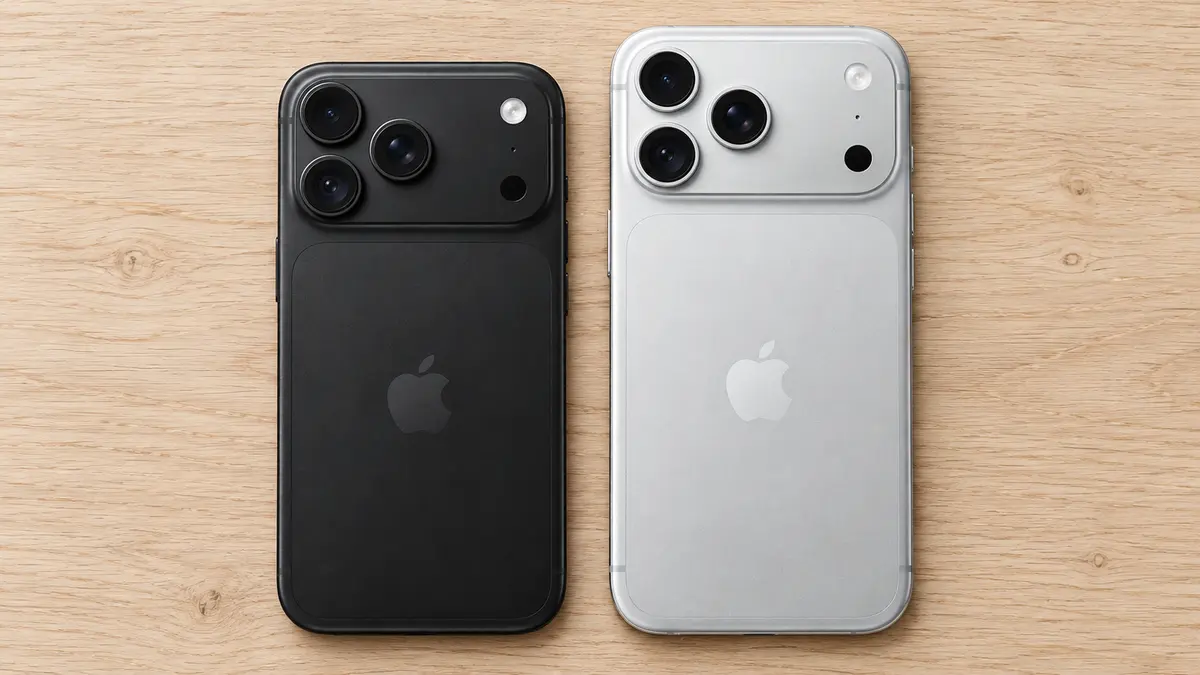
Both models have the same headline rear-camera hardware. Their 48-megapixel main, ultra-wide and telephoto cameras cover different views: an ordinary scene, a wider interior or landscape, and a tighter view of something farther away. Megapixels describe the number of picture elements a sensor can record; they do not guarantee that every photograph contains equally useful detail.
The main camera's variable aperture is the more interesting change. Aperture is the opening that admits light through the lens. Here it can use f/1.48, f/1.8, f/2.8 or f/4.0. A lower number means a wider opening, allowing more light through. A narrower opening can increase depth of field, the range of distances that appears acceptably sharp.
Imagine photographing a family around a dining table. More depth of field can help keep people at different distances in focus. In a dim room, opening the aperture gives the camera more light to work with. These aims can compete: narrowing the aperture reduces incoming light, so the camera must compensate elsewhere. Subject distance, movement and lighting still influence the result.
The camera makes these decisions automatically, while Pro controls let you adjust aperture, shutter speed and white balance yourself. Shutter speed determines how long light is collected for each exposure; white balance affects how neutral colours appear under different lighting. You do not need manual settings for everyday pictures, but they offer more control when automatic choices do not match your intention.
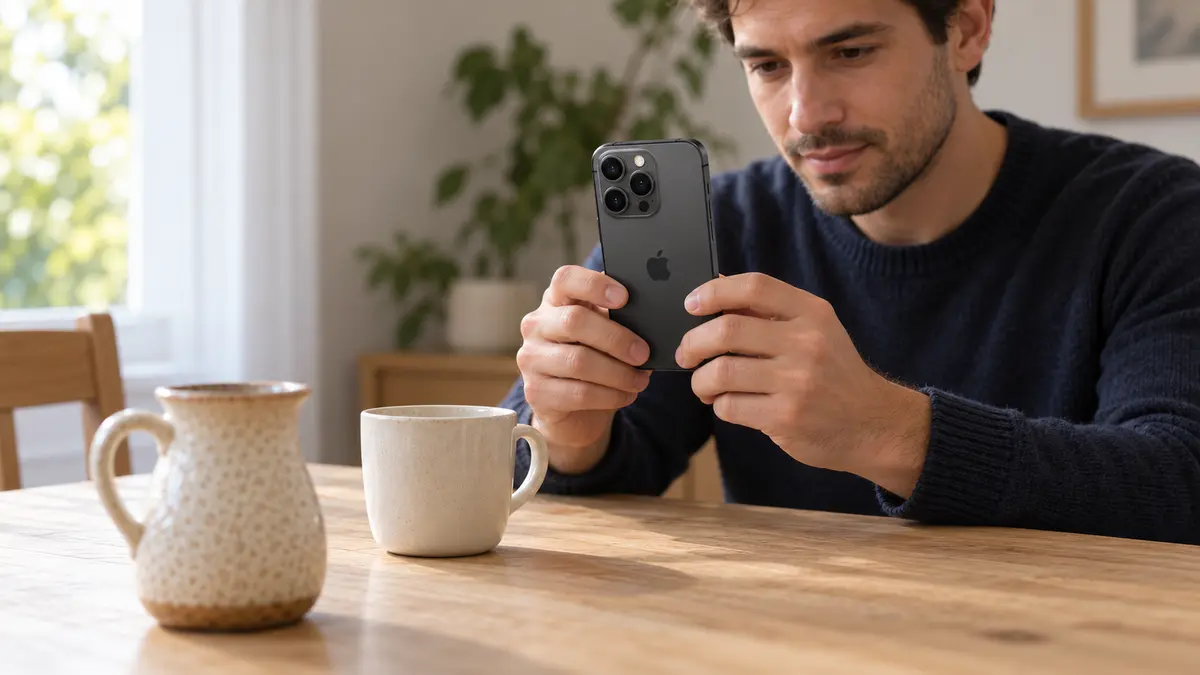
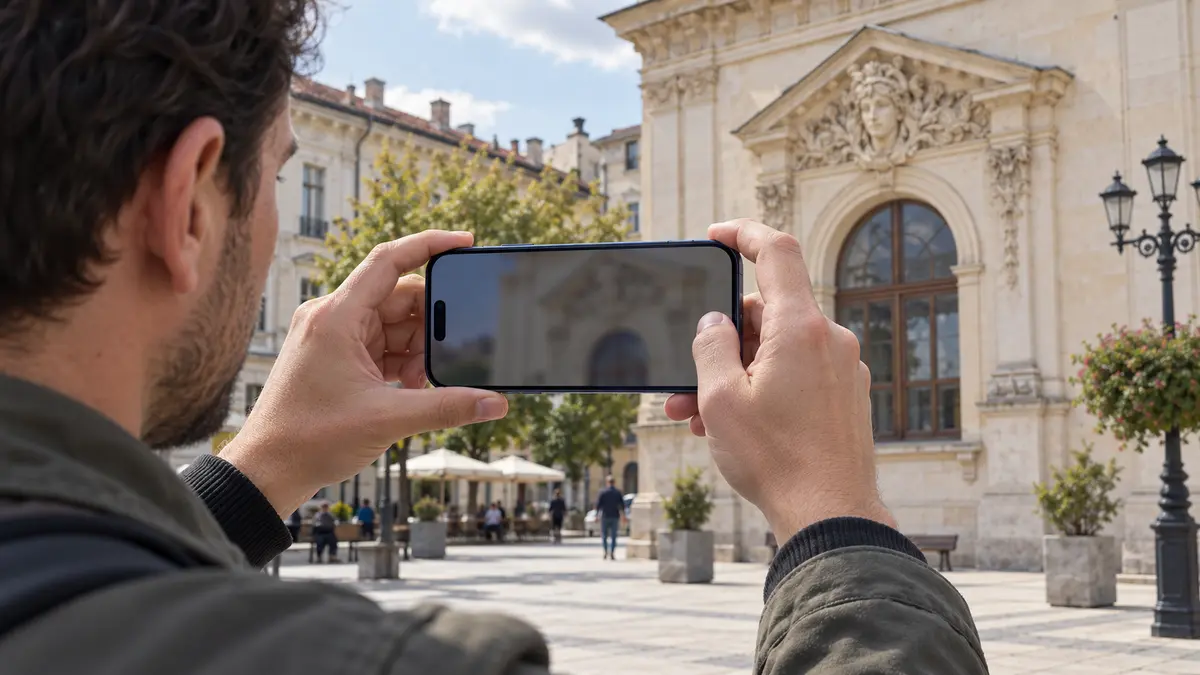
Zoom descriptions need closer attention. The dedicated telephoto camera provides a 4× view, while the 8× setting is described as optical-quality and produces a 12-megapixel image using a smaller portion of the sensor. There is no separate 8× lens or continuously variable optical zoom. Digital zoom can enlarge the view further, with increasing dependence on cropping and processing.
For a building detail across a square, a longer view can be useful. For a moving child indoors, more light and a suitable shutter speed may matter more than maximum zoom. Choose the framing that suits the scene, and compare photographs at the size you will actually share or print. A larger phone screen alone does not make the captured photograph better.
Battery reserve and charging are different advantages
The Pro Max's higher rated endurance makes it the more appealing option if your days involve long periods away from a socket. That could mean navigating between appointments, filming an event or travelling with frequent mobile-data use. It gives you a larger margin, although no published playback figure can predict exactly how your own combination of apps and signal conditions will behave.
Continuous video playback is much more predictable than a day of changing screen brightness, weak reception, camera use and background activity. Treat the 34-hour and 43-hour ratings as comparison points for the specified regional versions. Battery ratings differ for some overseas versions, so check the exact model instead of assuming a figure from an international review applies to every listing.
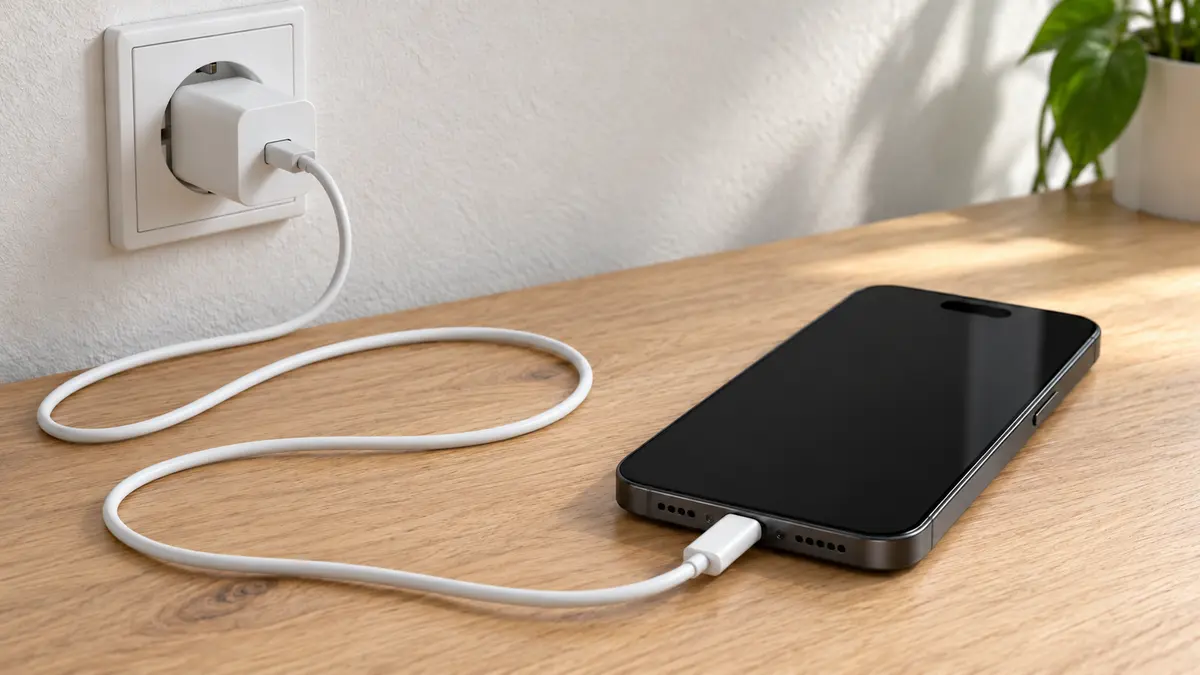
Fast charging helps when you have a short break near a socket. Both models are rated to reach up to 50% in around 15 minutes under the stated test conditions. Reaching that headline requires a compatible USB-C Power Delivery adapter capable of 60 W or more and supporting Adjustable Voltage Supply, or AVS, together with the supplied cable or a suitable equivalent. AVS lets compatible equipment negotiate the required voltage.
A large wattage printed on an adapter is not enough to establish that compatibility. It also does not mean the phone continuously draws that power. Charging changes with battery level, temperature and use, so the first half of a charge does not establish the time needed for a full one. The standard box includes a USB-C charging cable but no mains adapter.
MagSafe and compatible Qi2 wireless charging offer another kind of convenience: placing the phone on a suitable charger without plugging a cable into it. Check the charger's compatibility, power adapter and case requirements together. For someone who charges at a desk throughout the day, convenient top-ups may matter more than buying the largest handset solely for its endurance.
Choose storage around your photographs and videos
Both sizes offer the same storage capacities, so you can choose the body independently of how much space you need. Start with the storage screen on your current phone and consider how it filled up. A library that has grown steadily for four years deserves more headroom than a phone kept almost empty by regular file transfers.
As practical guidance, 256 GB can suit someone who mainly uses messaging, ordinary photography and streaming, provided their existing library leaves enough room. A person who keeps many videos, downloaded programmes and large games may find 512 GB more comfortable. The 1 TB and 2 TB options are easier to justify when you can identify the files that will occupy them. These are usage examples, not fixed capacity rules.
Recording formats make a substantial difference. ProRAW photographs retain more information for editing exposure and colour, while ProRes video uses less compression for an editing workflow. Both create larger files than ordinary everyday capture settings. They are useful when you intend to work on the material afterwards; switching them on for every casual picture or clip can create a storage problem without a useful benefit.
High-end video recording also involves more than internal capacity. ProRes at 4K and 120 frames per second requires compatible external storage. If you plan to use that capability, check the recording format, drive requirements and editing software before buying accessories. For family clips and routine social posts, ordinary recording modes are often more convenient to store, transfer and share.
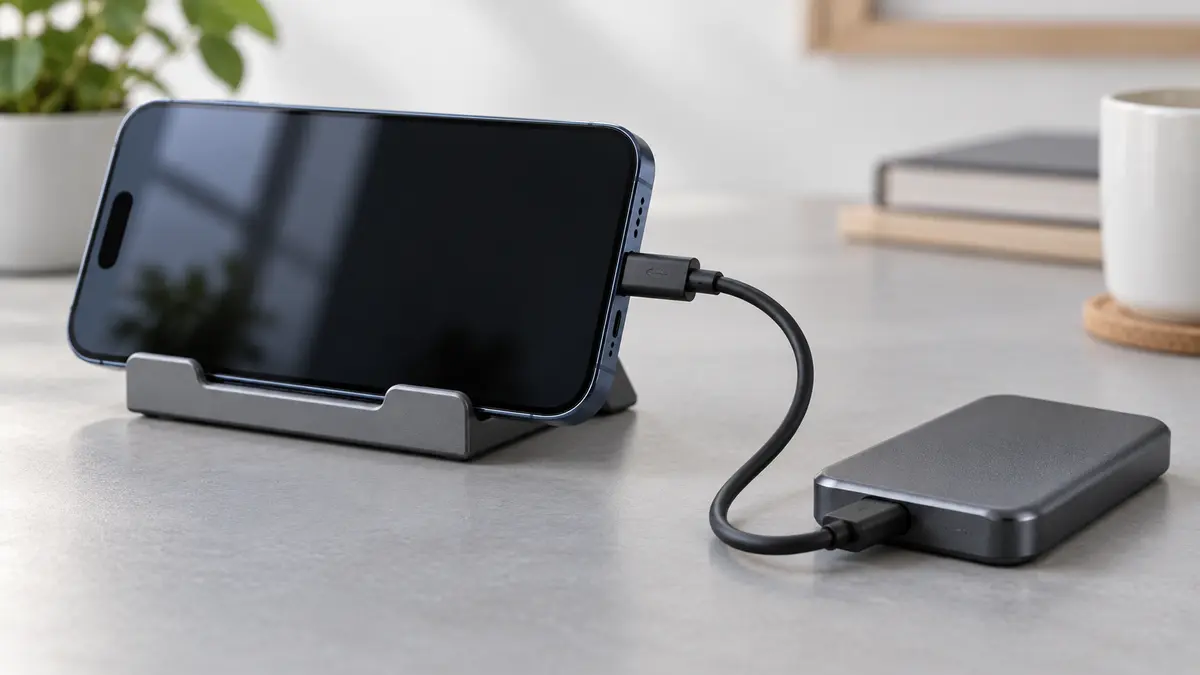
The USB-C socket supports transfers up to 10 Gbit/s with an appropriate USB 3 cable and compatible equipment. The included cable charges the phone but transfers data at USB 2 speeds. Identical-looking connectors therefore do not guarantee identical copying speeds. A suitable cable matters if you regularly move large video folders to a computer or external SSD, a compact drive using solid-state memory.
Cloud storage is separate from the phone's built-in capacity. Optimising iCloud Photos can keep smaller local copies while storing originals online, but retrieving an original may require a connection. Apps, downloads and other local data still need space on the handset. Consider recurring cloud costs and offline access alongside the price of a larger storage option.
Performance matters most when your work needs it
Both phones use A20 Pro and a vapour-chamber cooling system, which spreads heat away from the processor during demanding work. The processor handles calculations, graphics and other tasks; cooling helps it manage sustained loads. A game, a long recording session or an editing project can make those capabilities more relevant than opening another message.
The shared chip is a reason to choose between the bodies on comfort and endurance rather than assume that Max means a completely different performance tier. Actual behaviour still depends on the application, temperature and workload. If you already own a recent Pro model that handles your tasks well, a new processor name alone is a weak reason to replace it.
Software features deserve an equally practical assessment. Both models support Apple Intelligence, but availability depends on the feature, language and region. At publication in October 2026, Romanian and Russian are not supported Apple Intelligence languages. The device and Siri must be set to the same supported language for the relevant features. Ordinary interface-language support and AI-language support are separate matters.
If you work comfortably in English or another supported language, those tools may be useful. If you expect Romanian or Russian summaries and writing assistance, verify the exact function before making it a reason to buy. Do not base the purchase on an assumed future language rollout, and check important AI-generated information before relying on it.
Buying for Moldova: verify the regional version
Two listings with the same model name and storage can represent phones intended for different markets. Some versions support a physical nano-SIM alongside eSIM; versions originally sold in markets including the United States and United Arab Emirates are eSIM-only. An eSIM is a mobile subscription activated digitally, without inserting a removable SIM card.
Orange and Moldcell support eSIM, but confirm the activation procedure and eligibility of your particular subscription. Moving photographs and apps to a new phone does not necessarily move the mobile subscription automatically. If your existing number is important for banking or work, arrange its transfer before giving up access to the old phone.
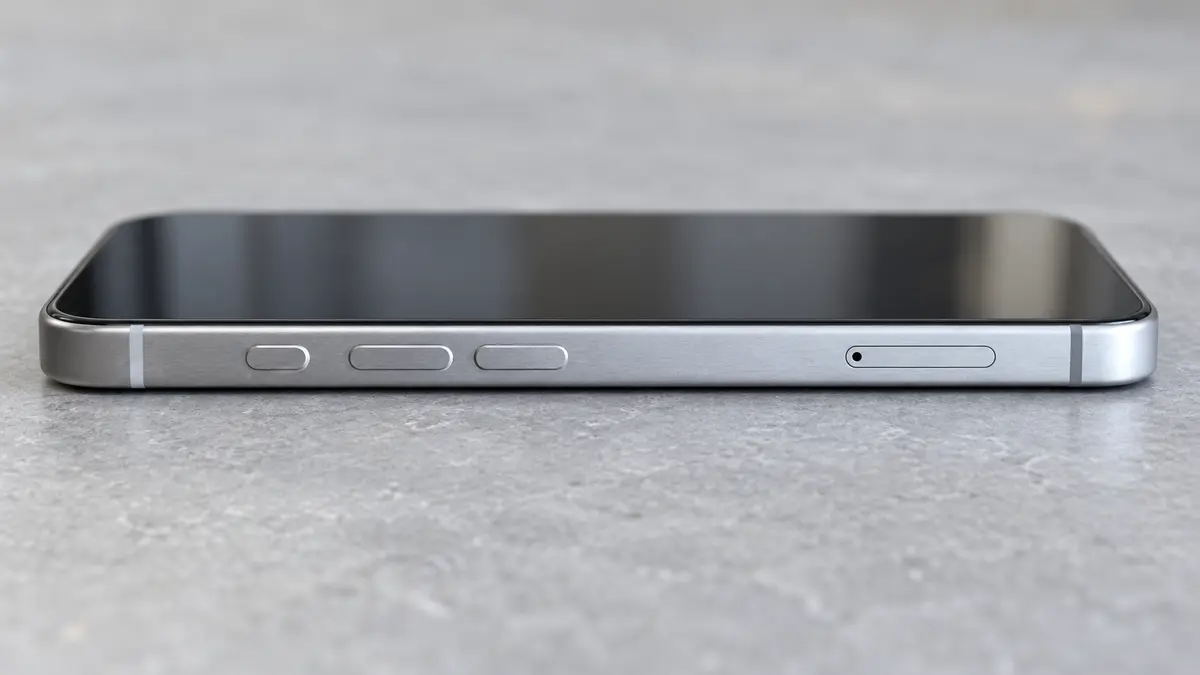
Ask for the exact model number and intended sales region, rather than relying on a description such as “global version”. Also confirm that the handset is unlocked for other operators. In Settings, General, About, the network-provider or carrier-lock entry should indicate “No SIM restrictions” on an unlocked device. The presence of eSIM support does not establish that a phone is unlocked.
Check network services with your operator using that exact version. A handset's 5G capability still depends on compatible service, coverage and software. Ask the seller who handles warranty repairs, where the phone would need to be sent and what the written terms cover. These details can matter more after purchase than a minor difference in the advertised price.
Allow for protection, and judge the upgrade honestly
Both models combine an aluminium body with protective front and rear glass, but a premium construction does not make a phone immune to damage. Choose a case for the exact model, with suitable camera and connector openings. Check that a screen protector fits and that any case you choose works with your intended wireless charger. Assess the grip and weight with that protection fitted.
The IP68 rating describes resistance to water and dust under controlled conditions; it is not permission to treat the phone as an underwater camera. Resistance can diminish with wear. If the phone gets wet, let it dry fully before connecting a charging cable. Normal care is more useful than treating a laboratory rating as a promise that accidents cannot cause damage.
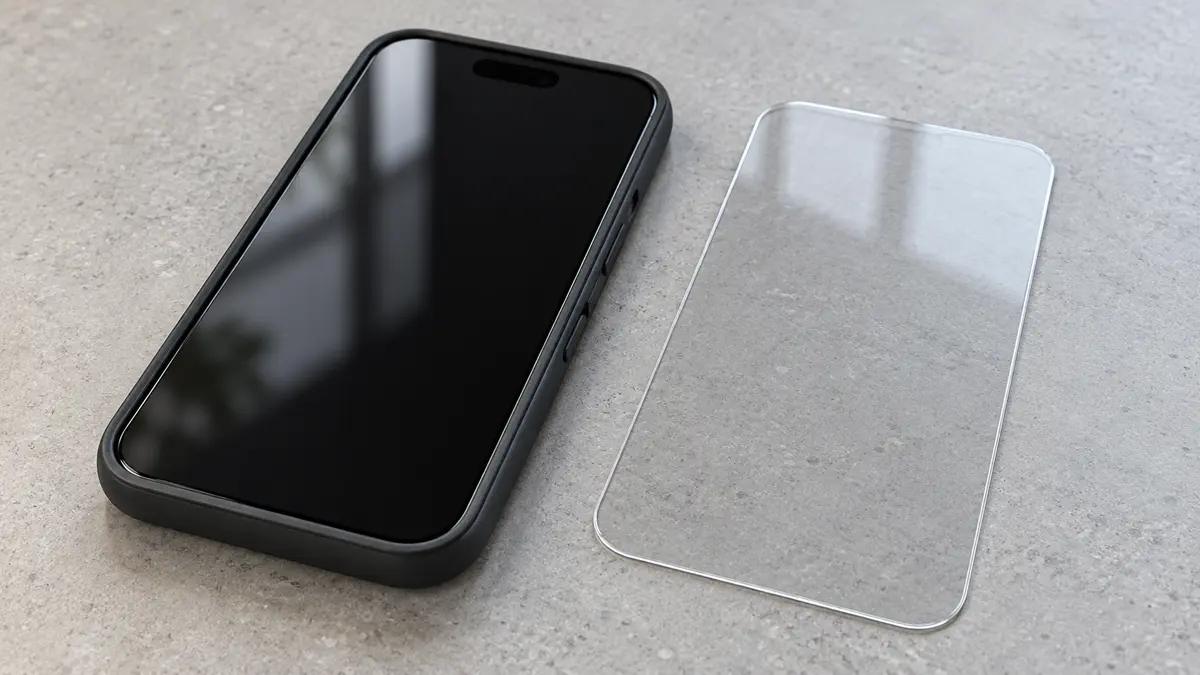
For a hypothetical buyer who photographs products for a small shop, the smaller Pro with more storage may be a better combination than a Max whose width is uncomfortable. Someone who spends long days travelling and reviews documents between appointments might reasonably prioritise the Max's screen and battery reserve. Neither example makes the other configuration wrong.
If your current phone already serves you well, identify the limitation you are paying to remove: an uncomfortable screen, insufficient space, a tired battery or a camera feature you will actually use. A battery-service quote or a change in storage habits may also be worth considering before replacing a capable handset.
The iPhone 18 Pro is the natural choice when you want the shared Pro features in the more manageable body. The iPhone 18 Pro Max earns its place when the larger viewing area and extra endurance improve your day enough to justify carrying it. Once that decision is clear, compare the exact storage, regional version and total accessory cost. You can explore smartphones and phones on IVO and phone and tablet accessories, using the details of each listing to match the purchase to those priorities.