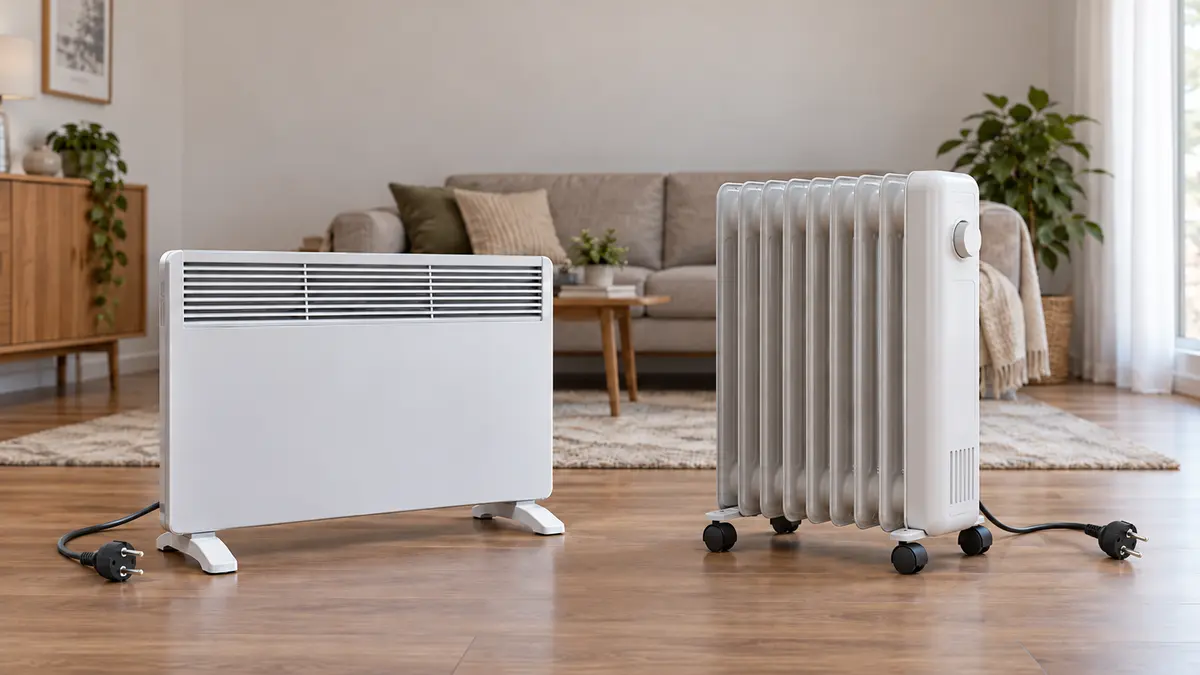
Both can provide useful extra warmth. The better choice depends on how quickly you need it, how long you will stay in the room, and how much heat the room loses. The number of fins, the size of the casing and an “eco” label tell only part of the story. Controls and safe positioning deserve just as much attention.
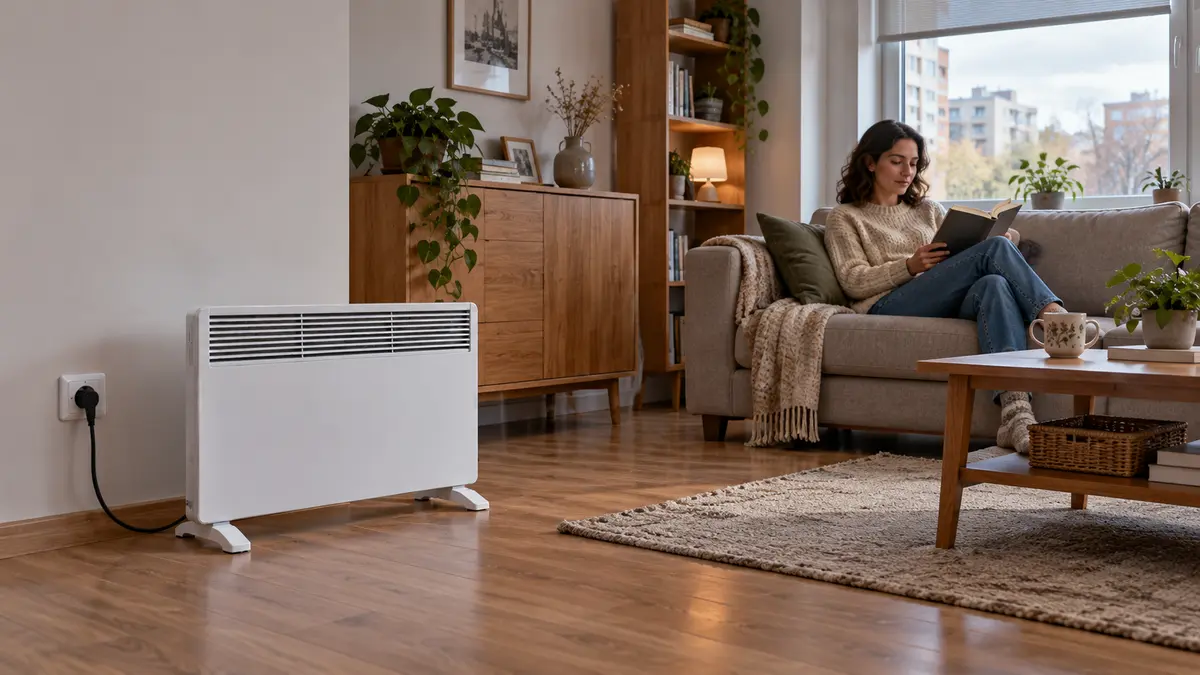
How convectors and oil-filled radiators heat a room
An electric convector warms air as it passes around an electrically heated element. Cooler air enters the casing, usually from below, and warmer air rises through the upper openings. This circulation is called convection. A fanless model relies on that natural movement; a fan-assisted version helps move the warmed air into the room.
An oil-filled radiator also contains an electric heating element, but this first warms oil sealed inside the appliance. The oil transfers heat to the metal body and fins. Those surfaces warm passing air and also radiate heat towards their surroundings. Despite the name, an oil-filled radiator therefore uses convection too. The oil carries heat; it is not burned as fuel.
The practical difference is the amount of material that must warm up. A typical lightweight convector begins releasing useful warmth relatively quickly and responds promptly when switched off. An oil-filled radiator generally takes longer to warm its oil and metal, then continues releasing stored heat after the element stops drawing power.
This slower response is called thermal inertia. It can make an oil radiator’s heat delivery feel steadier through thermostat cycles, although comfort still depends on the controls and the room. A hot appliance does not mean every corner of the room has reached the same temperature.
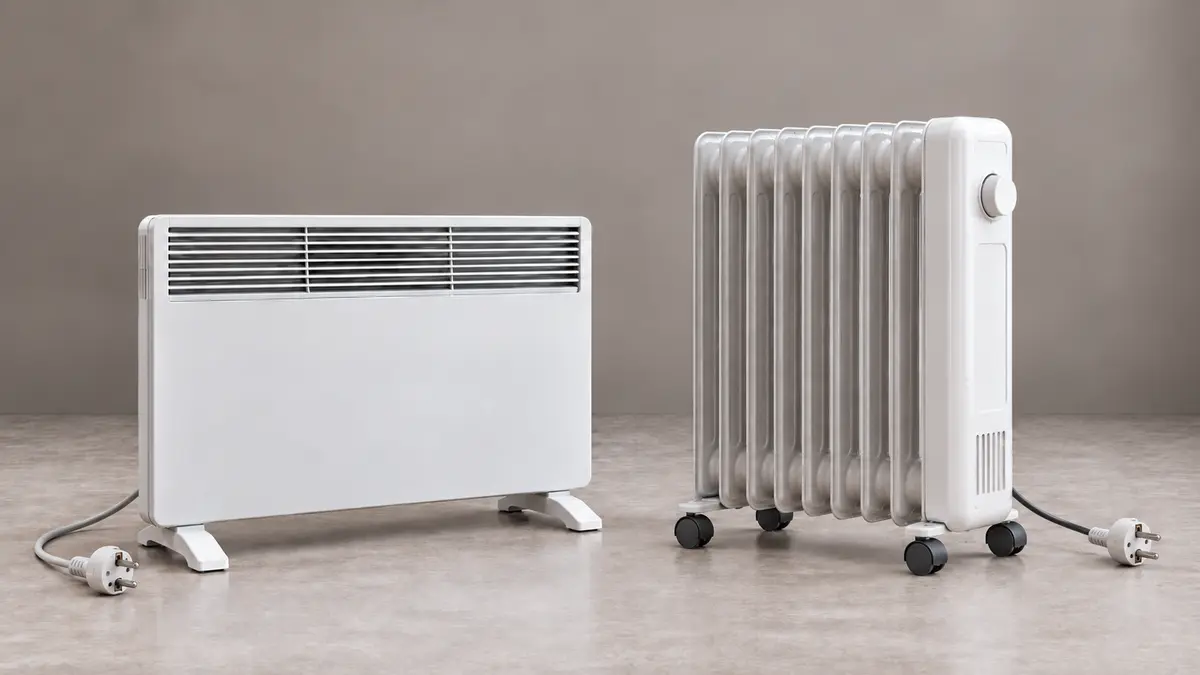
The usual differences are easiest to compare together:
Characteristic | Electric convector | Oil-filled radiator |
|---|---|---|
Initial response | Usually quicker to begin warming the air | Usually slower while oil and metal warm up |
After switching off | Heat output generally falls sooner | Stored heat continues to be released |
Noise | Fanless models are quiet; a fan adds noise | Usually quiet without a fan; some models include a fan boost |
Everyday handling | Often lighter; floor and wall versions exist | Often heavier and fitted with castors |
Natural fit | Rooms where prompt changes in heating are useful | Longer occupied periods where a slower response is acceptable |
These are general characteristics, not measured results or guarantees for every model. Both types can maintain a comfortable room temperature when their output, thermostat and placement suit the job.
Match the response to your daily routine
If you use a spare room for an hour after dinner, a responsive convector is an understandable starting point. You want warmth during a short occupied period and little reason to keep delivering it after you leave. A fan option may help distribute air during warm-up, provided its sound does not bother you.
For a long afternoon at a desk or an evening spent reading, an oil-filled radiator’s slower start may matter less. Some people prefer the gentle warmth from its broad metal surfaces and the way it continues releasing heat between heating cycles. A good fanless convector can also suit this routine, so quiet operation alone does not settle the choice.
Think about where the appliance will spend most of its time. Moving one heater between two rooms can be practical when those rooms are used at different times. Moving it repeatedly over door thresholds, or carrying it upstairs, makes weight and handles more important than an extra display mode. Switch the heater off, unplug it and let it cool before moving it by its intended handle.
A portable appliance can also warm a bedroom while you are awake and present. If you need continuing heat while sleeping or away, make that an explicit requirement when choosing the model: automatic temperature control does not, by itself, establish that unattended operation is permitted.
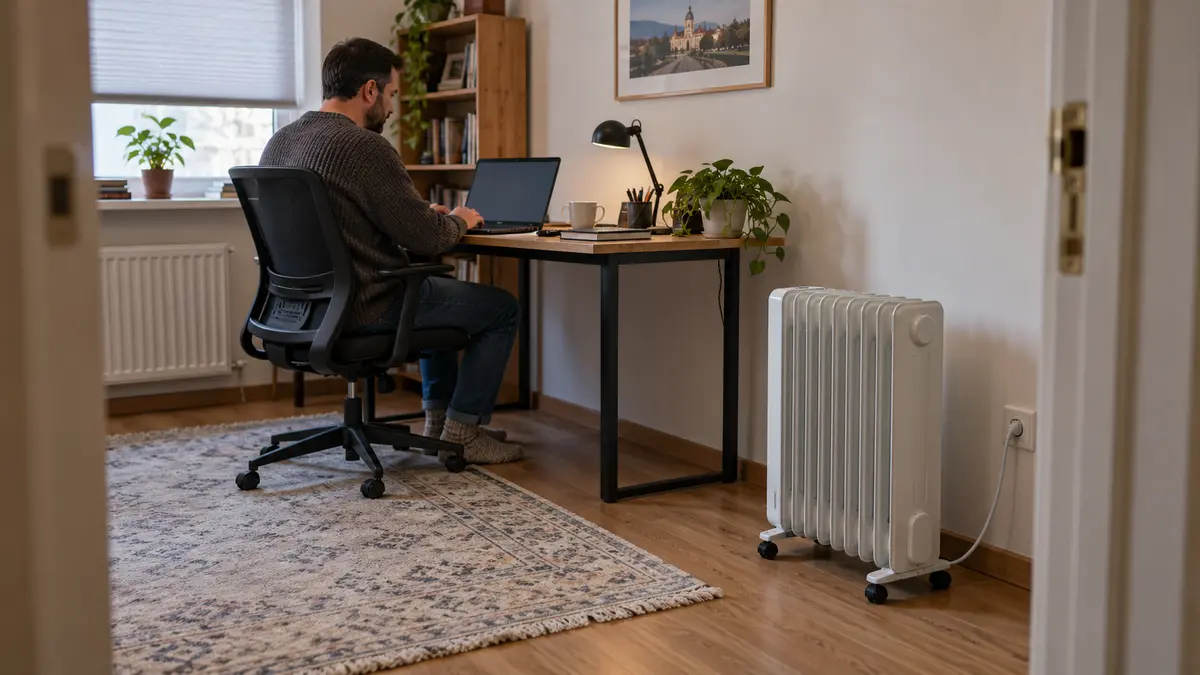
Choose power for the room, not just its floor area
The power rating, expressed in watts, describes how quickly the heater can use electrical energy and produce heat. A 2,000 W model has a maximum input of 2 kilowatts, or 2 kW. That capacity must be sufficient both to warm the room initially and to replace heat escaping while you use it.
Floor area helps, but a claim such as “suitable for 20 m²” depends on assumptions. Ceiling height, insulation, windows, draughts, outside temperature and the number of external walls all affect the result. Whether the appliance is providing the room’s only heating or supplementing an existing radiator matters too.
Imagine two hypothetical rooms, each measuring 18 m². One is in an insulated flat with heated rooms beside it and a well-sealed window. The other is a corner room in a detached house with two exposed walls and a draughty door. Buying the same heater solely because the floor areas match overlooks how differently those rooms lose heat.
Before ordering, measure the room and its ceiling height, and check the conditions behind the manufacturer’s suggested coverage. For a poorly insulated room or a heater intended as the main heat source, a room heat-loss assessment gives a better basis than a universal watts-per-square-metre rule.
More power is useful when the room needs it. An undersized heater may run continuously without reaching the desired temperature. A higher-powered model with an effective thermostat need not run at full output all the time, but its maximum electrical load must suit the installation.
Likewise, more oil-radiator fins do not automatically mean lower bills or a warmer home. They affect the appliance’s shape and heat-emitting surface; rated output, controls and room conditions still determine what it can do.

Running costs depend on kilowatt-hours
An oil-filled radiator is not inherently cheaper to run than a convector simply because it contains oil. Both are electric resistance heaters: almost all the electricity they consume becomes heat at the point of use. Their construction changes when and how that heat reaches you.
A 2 kW convector running continuously at full power for one hour uses approximately 2 kWh of electricity. A 2 kW oil-filled radiator operating under the same conditions uses approximately the same amount. During warm-up, some energy remains temporarily stored in the radiator’s oil and metal. Its later warmth is the release of energy already paid for.
To estimate cost, multiply power in kW by the hours spent heating at that power, then by your electricity price per kWh. The examples below use a hypothetical tariff of 4 MDL/kWh, solely to illustrate the calculation; this is not a statement of Moldova’s current electricity tariff.
Selected heating power | Electricity used in one hour of continuous heating | Cost at the illustrative 4 MDL/kWh |
|---|---|---|
1,000 W | 1 kWh | 4 MDL |
1,500 W | 1.5 kWh | 6 MDL |
2,000 W | 2 kWh | 8 MDL |
A thermostat changes how long the element stays on. If a hypothetical 2 kW heater operates for a combined two hours during a four-hour period, it uses approximately 4 kWh for heating, costing 16 MDL at that example tariff. The 50% operating time is an illustration, not a prediction: a colder room may require continuous heating.
Actual bills can differ between appliances because of temperature settings, control accuracy, overheating of the room and heating when nobody needs it. Selecting a lower wattage also does not guarantee a lower total cost if the heater must run longer to deliver the required warmth.
For heating several rooms every day throughout winter, it is worth comparing a properly selected heat pump, including a suitable split air conditioner with a heating mode. It transfers heat from outdoors and can use less electricity for the same delivered warmth. Suitability and performance in cold weather depend on the model and installation.
Pay attention to the thermostat and timer
A power setting and a thermostat do different jobs. Selecting 1,000 W instead of 2,000 W changes the heating rate while the element is operating. The thermostat decides whether more heat is needed to maintain the chosen temperature, usually by switching the element on and off or regulating its output.
A simple mechanical dial can be perfectly usable, but numbers around it may represent relative settings rather than degrees Celsius. You may need to adjust it over several sessions to find a comfortable level. A digital thermostat makes a target temperature easier to select, although a precise-looking display does not guarantee equally precise temperature control throughout the room.
On a basic heater already operating at its selected maximum power, turning the thermostat much higher will not make the element more powerful. It mainly tells the appliance to continue heating for longer. Adaptive controls and boost modes vary, so check the manual rather than assuming every model behaves identically.
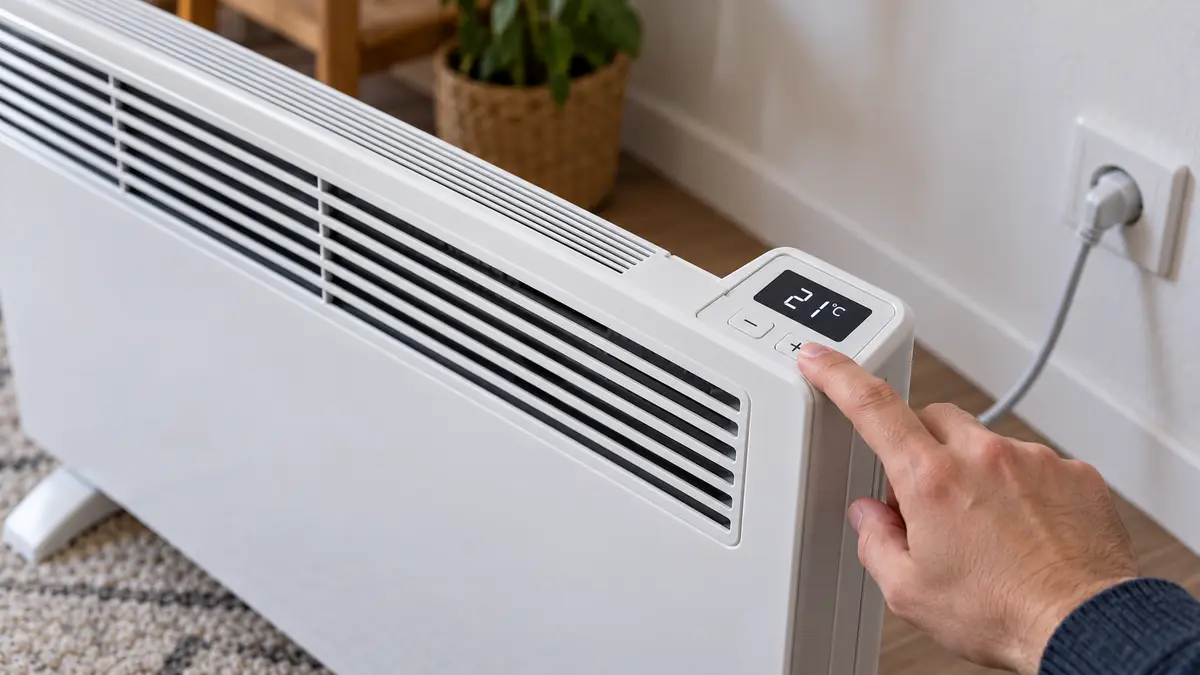
Useful extras are those you will actually use. A timer can help end a heating session; a weekly programme may suit a regular routine on a heater intended for scheduled operation. Check whether settings survive a power interruption and whether essential controls remain available without an app.
An “eco” mode needs an explanation of what it changes: perhaps the target temperature, power level or schedule. It cannot make an ordinary resistance element produce more heat from each kilowatt-hour. Choose suitable built-in controls rather than assuming that an external timer or smart plug is permitted; some heater manuals prohibit external switching devices.
Consider noise, air comfort and available space
If you are sensitive to sound, look specifically for fanless operation. Both fanless convectors and ordinary oil-filled radiators can be quiet, though thermostat clicks and occasional expansion noises are possible. A fan adds airflow noise, and on some models a “turbo” function adds heating power as well. Compare the stated maximum consumption with boost enabled.
Neither type should be chosen on the promise that it will solve dry air. Heating air without adding moisture lowers its relative humidity, the proportion of water vapour present compared with the maximum at that temperature. Neither appliance normally removes water like a dehumidifier, and neither burns fuel or consumes oxygen as part of producing heat. Oil inside a radiator does not control the room’s humidity.
Physical dimensions deserve an equally practical look. Measure a convector with its feet fitted, or an oil radiator across its castor assemblies, rather than considering only the slim metal body. Check whether the cable reaches a suitable socket from the intended position without crossing a walkway.
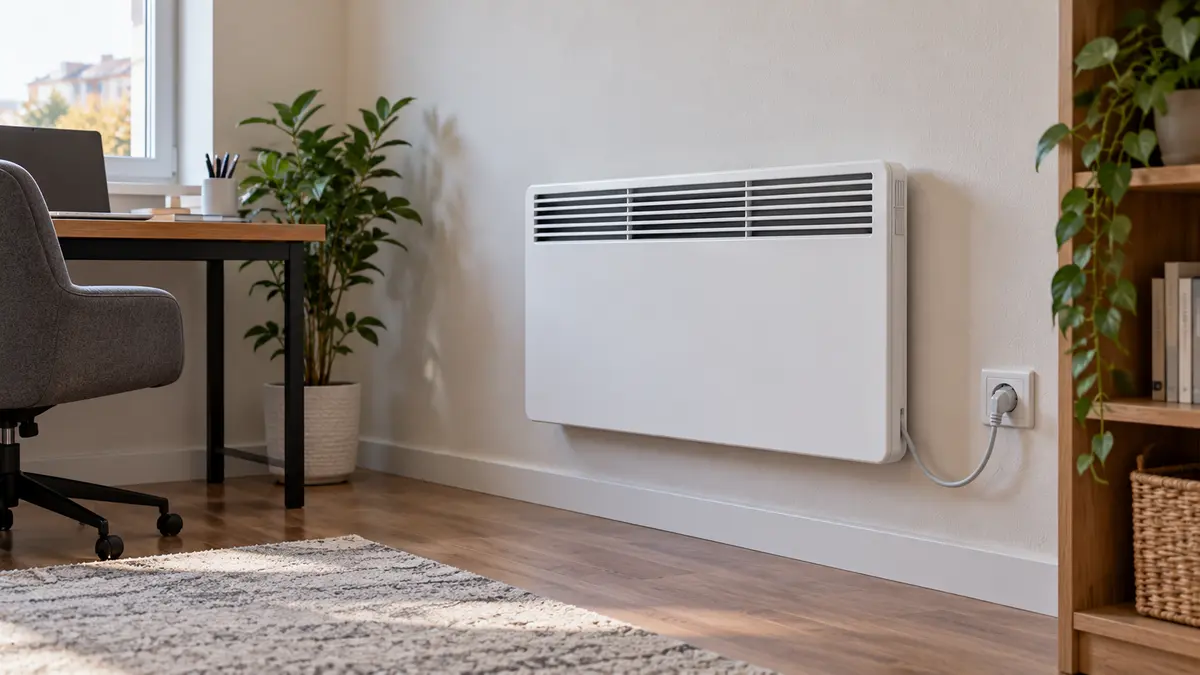
A wall-mounted convector can free useful floor space, especially in a small study. It must be a model designed for wall mounting, installed using its specified brackets and clearances. Some appliances support both floor and wall use; others support only one. Confirm what mounting parts are supplied, and leave the air inlet and outlet unobstructed.
Safe positioning and care are part of the purchase
Choose a version intended for Moldova’s nominal 230 V, 50 Hz household supply, with a suitable plug. Plug a portable heater directly into a sound wall socket, without an extension lead or multiway adaptor. Several sockets can share one circuit, so using different outlets does not automatically make several high-powered appliances safe to run together. Have an electrician assess doubtful wiring or socket capacity.
Keep the cable away from hot surfaces, uncovered and out of walking routes. If a plug or socket becomes unusually hot, discoloured or loose, stop using that connection and have it checked. Positioning the heater within reach of its own cable is preferable to improvising an electrical connection.
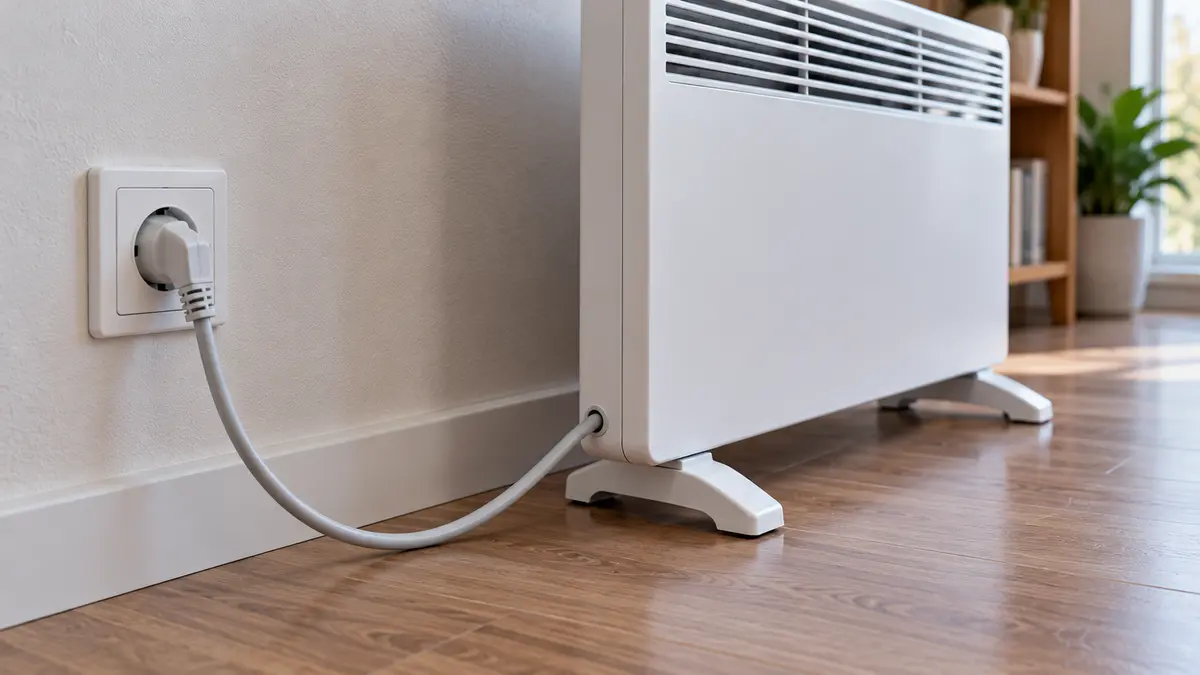
A portable heater needs a firm, level floor and correctly fitted feet or castors. Keep it at least 1 m from combustible items such as curtains, bedding and furniture, and follow any greater or direction-specific clearances in its instructions. For a wall-mounted convector, follow its specified mounting and surrounding clearances.
Never cover the heater or use it to dry clothes. Overheating protection and a tip-over switch are worthwhile safeguards, but they do not make blocked vents or unsuitable placement acceptable. Both types can have surfaces hot enough to burn, so keep children and pets away from them. An oil radiator stays hot after switch-off. A control-panel child lock prevents setting changes; it does not make hot metal safe to touch.
For ordinary temporary use, switch a portable heater off before sleeping or leaving it unattended. Continuing background heating requires a model explicitly designed for that duty and compliance with its installation and operating instructions. Neither the presence of oil nor wall mounting alone is proof that unattended use is suitable.
A bathroom needs particular care. Check the exact model’s stated suitability: an IP rating describes the casing’s protection against the entry of solid objects and water, but does not alone establish where or how a heater may be installed. Have an electrician check the location and electrical protection against the appliance instructions and the requirements applicable in Moldova.
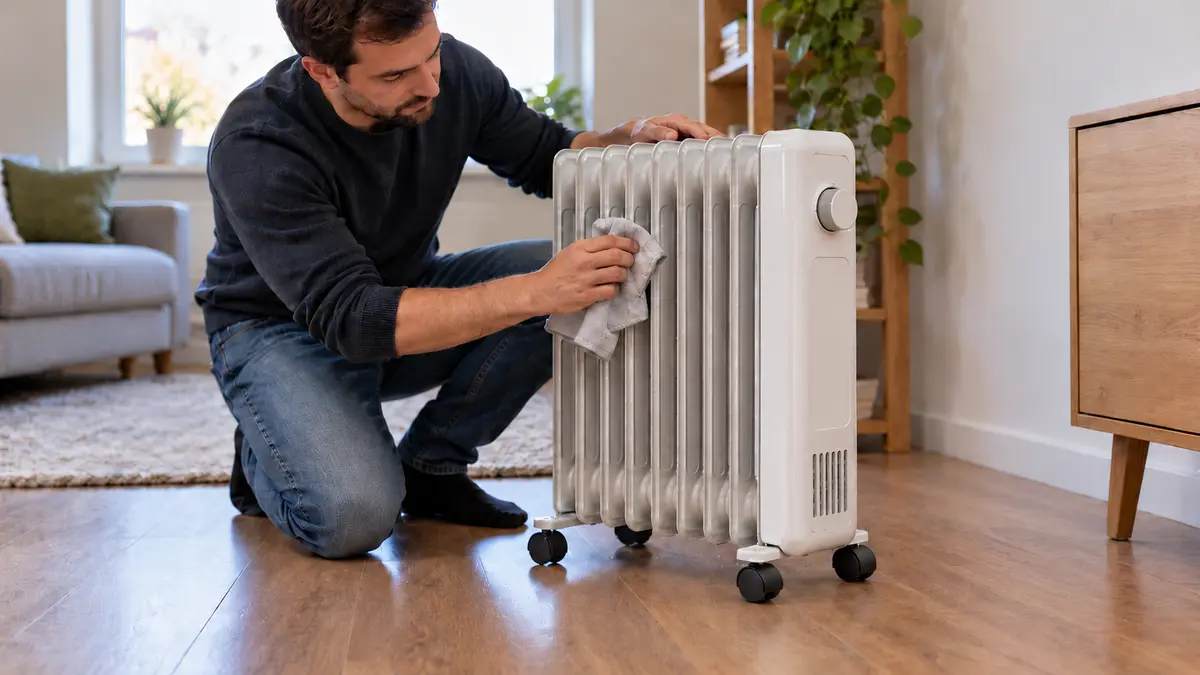
Routine care is usually straightforward. Switch off the appliance, disconnect it from the electrical supply as its instructions require, and let it cool before removing dust from accessible vents or fins. Inspect the cable and supports before seasonal use. The sealed oil does not need routine topping up or replacement; if it leaks, stop using the radiator and seek authorised service rather than opening it yourself.
Choose the heater that fits the way you live
Consider a hypothetical convector described as “2,000 W, electronic thermostat, two power levels, optional fan, floor or wall mounting”. For a room used in short sessions, its responsive heating and adjustable installation may be useful. The meaningful questions are whether 2,000 W suits the room, whether the fan can remain off, and whether the brackets, controls and safe clearances fit your space.
A hypothetical “2,000 W oil-filled radiator, thermostat, three heat settings and castors” may be a comfortable choice for long occupied evenings. It will take longer to warm and cool, and moving it will be less convenient if there are stairs. Its heat retention can be pleasant, but it is not evidence of a lower electricity bill than the convector.
Once you know your room’s needs and your heating routine, compare individual models for adequate output, usable controls, manageable dimensions and clear operating instructions. Check the warranty terms and available service for the particular product as well.
You can explore electric convectors and oil-filled radiators on IVO with those priorities in mind. The right choice is the one that provides comfortable warmth when you need it and fits safely into your home and daily routine.