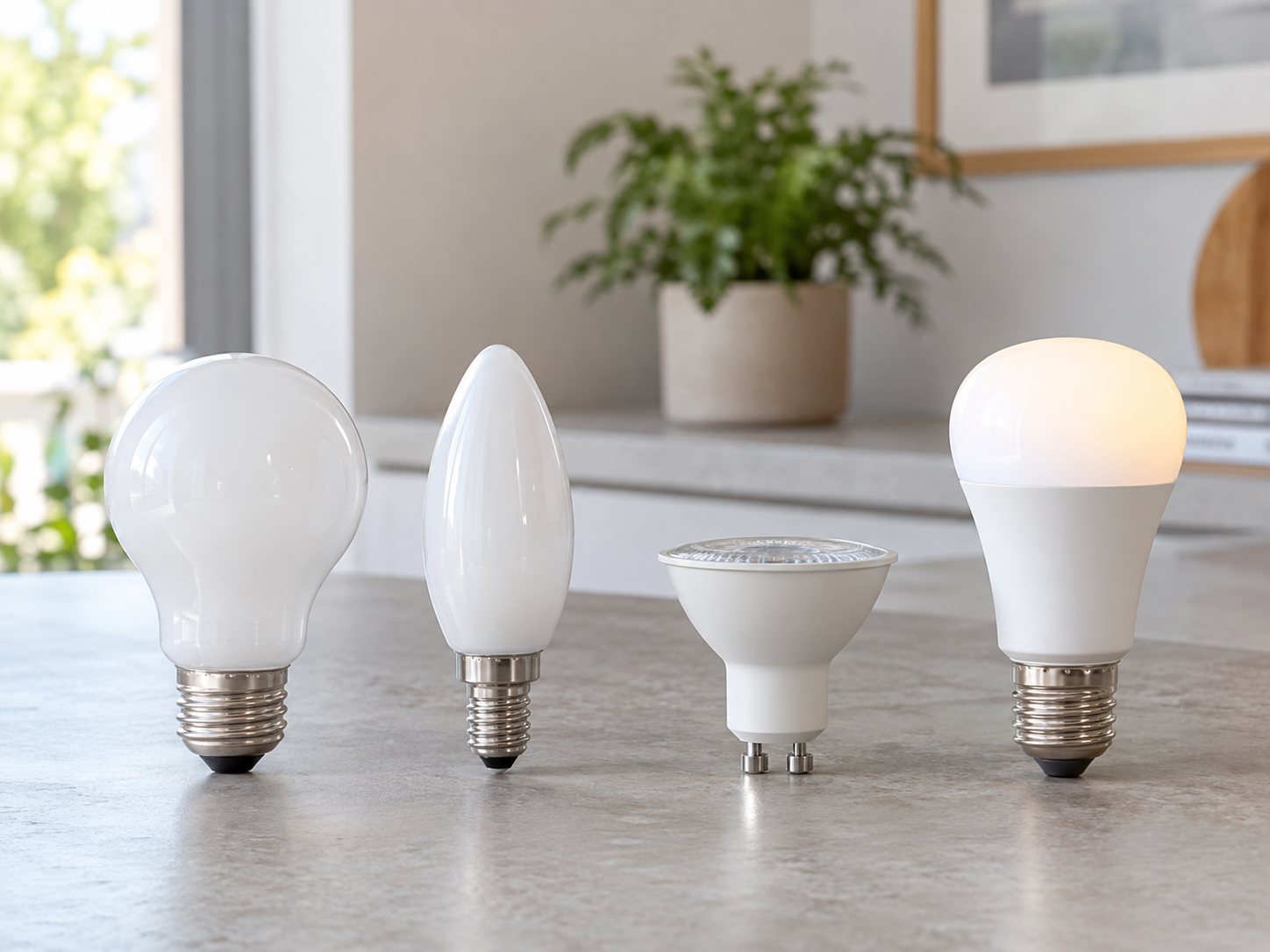
Yet when we buy a light bulb, the decision often comes down to two questions: will it fit the lamp, and how many watts does it use? The first is essential. The second tells only part of the story.
Other information appears on the packaging: E27, 806 lm, 3000 K, CRI 80 or “dimmable”. You do not need to be an electrician to understand these terms. They are simply clues about how the bulb will work in your home. Once you know what to look for, choosing the right light becomes much easier—and you no longer have to buy by guesswork.
Start with the light fixture you already have, not the bulb you like
The first thing to check is the base: the part of the bulb that fits into the light fixture’s socket. A bulb might offer exactly the brightness and light colour you are looking for, but none of that matters if it does not fit your lamp.
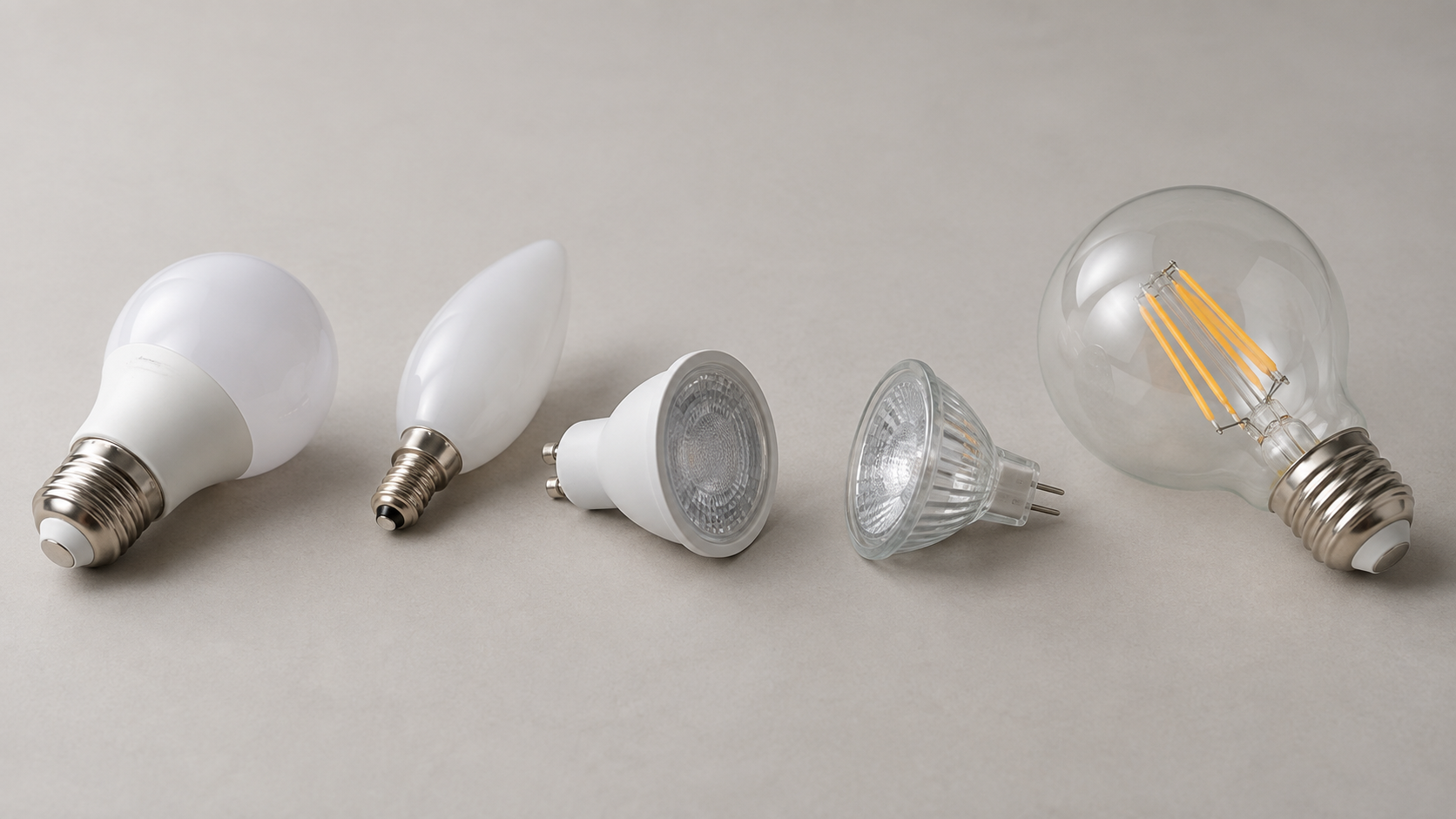
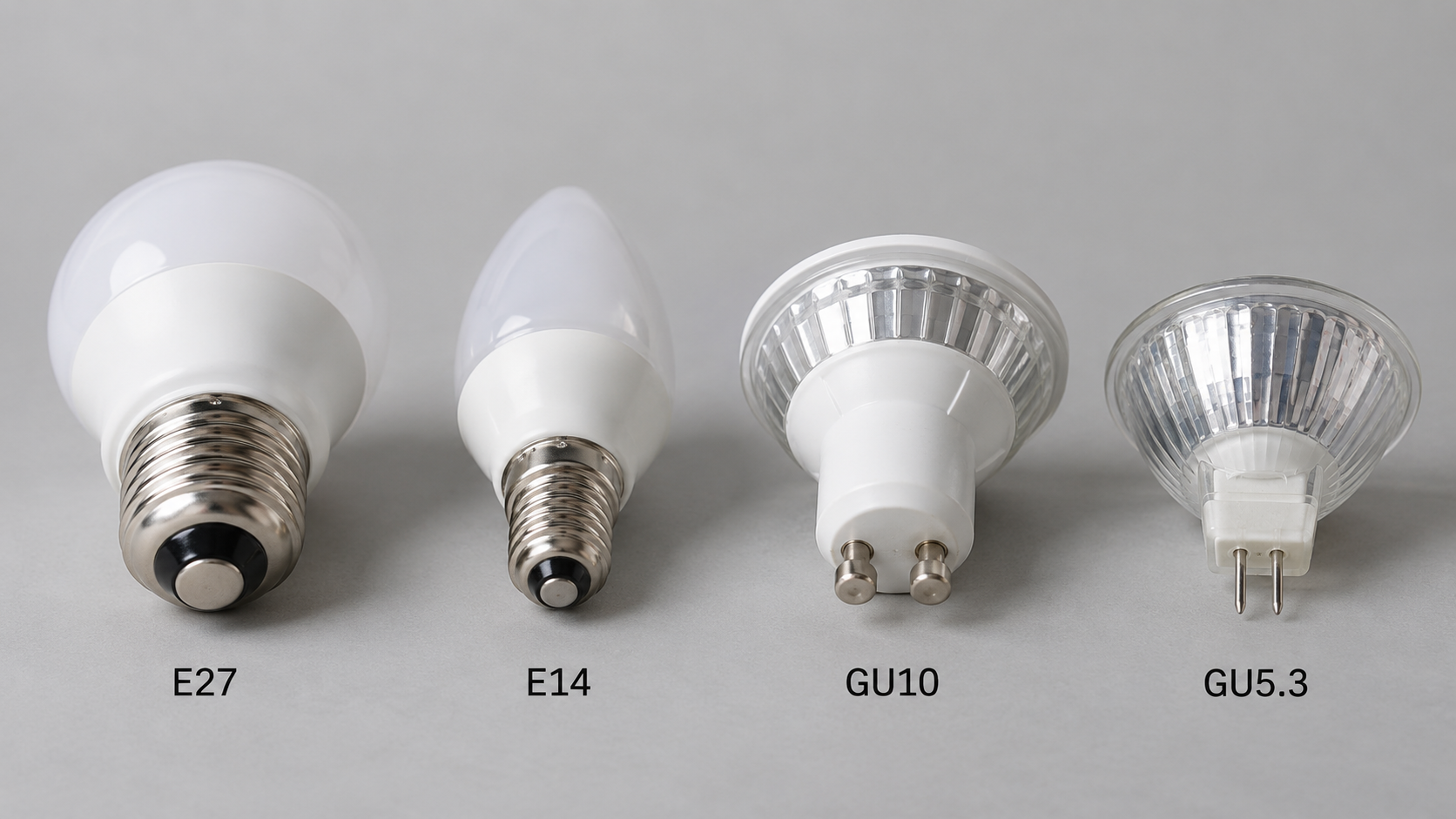
Screw bases are the easiest to recognise. E27 is the larger version found in many chandeliers, ceiling lights, table lamps and floor lamps. The letter “E” refers to the Edison screw system, while the number indicates the approximate diameter of the thread in millimetres. E14 works on the same principle but has a smaller screw base. The fact that both bulbs screw into place does not make them interchangeable.
Spotlight bulbs are different. Instead of a screw base, they may have pins that lock into place with a twist or thin, straight pins. The comparison below will help you recognise the main types.
Base type | How to recognise it | Where it is commonly found |
|---|---|---|
E27 | Large screw base; the bulb screws into the socket. | Chandeliers, ceiling lights, table lamps and floor lamps. |
E14 | Small screw base; the bulb screws into the socket. | Decorative chandeliers, compact table lamps and candle-shaped bulbs. |
GU10 | Two short pins; the bulb is inserted and secured with a small twist. | Ceiling spotlights and certain track-lighting systems. |
GU5.3 | Two thin, straight pins. | Spotlights, including low-voltage installations; the supply voltage must be checked separately. |
There are also compact bases, such as G9 and G4, found in decorative chandeliers, wall lights, furniture lighting and small fixtures. In these cases, choosing a bulb that looks like the old one is not enough. The product markings and the fixture’s specifications are more reliable guides than its appearance in a photograph.
It is also worth checking the supply voltage from the beginning, particularly with certain spotlight bulbs, G4 models and furniture-lighting systems. Some operate at 12 V and use a transformer or driver; they are not designed to connect directly to mains voltage. When replacing this type of bulb, compare the voltage marked on the old product with the voltage specified for the installation.
Lumens tell you how much light you get. Watts tell you how much power the bulb uses
For a long time, light bulbs were bought almost exclusively according to their wattage. We had a rough idea of how much light a 40 W, 60 W or 100 W incandescent bulb would produce, and we chose accordingly. With LED bulbs, that habit is no longer enough.
Power measured in watts tells you about electricity consumption, not directly about the amount of light produced. For that, look for the value expressed in lumens, abbreviated as “lm”. The higher the luminous flux, the more light the source produces.
As a rough guide, a bulb producing around 800 lm provides an amount of light similar to what people associate with an old 60 W incandescent bulb. A 400–500 lm product produces less light, while a 1,500–1,600 lm bulb is considerably brighter. These values help you compare products, but they do not determine on their own whether a bulb is suitable for a particular room. A bulb that is sufficient for a table lamp may seem too weak if it is the only light source in a large space.
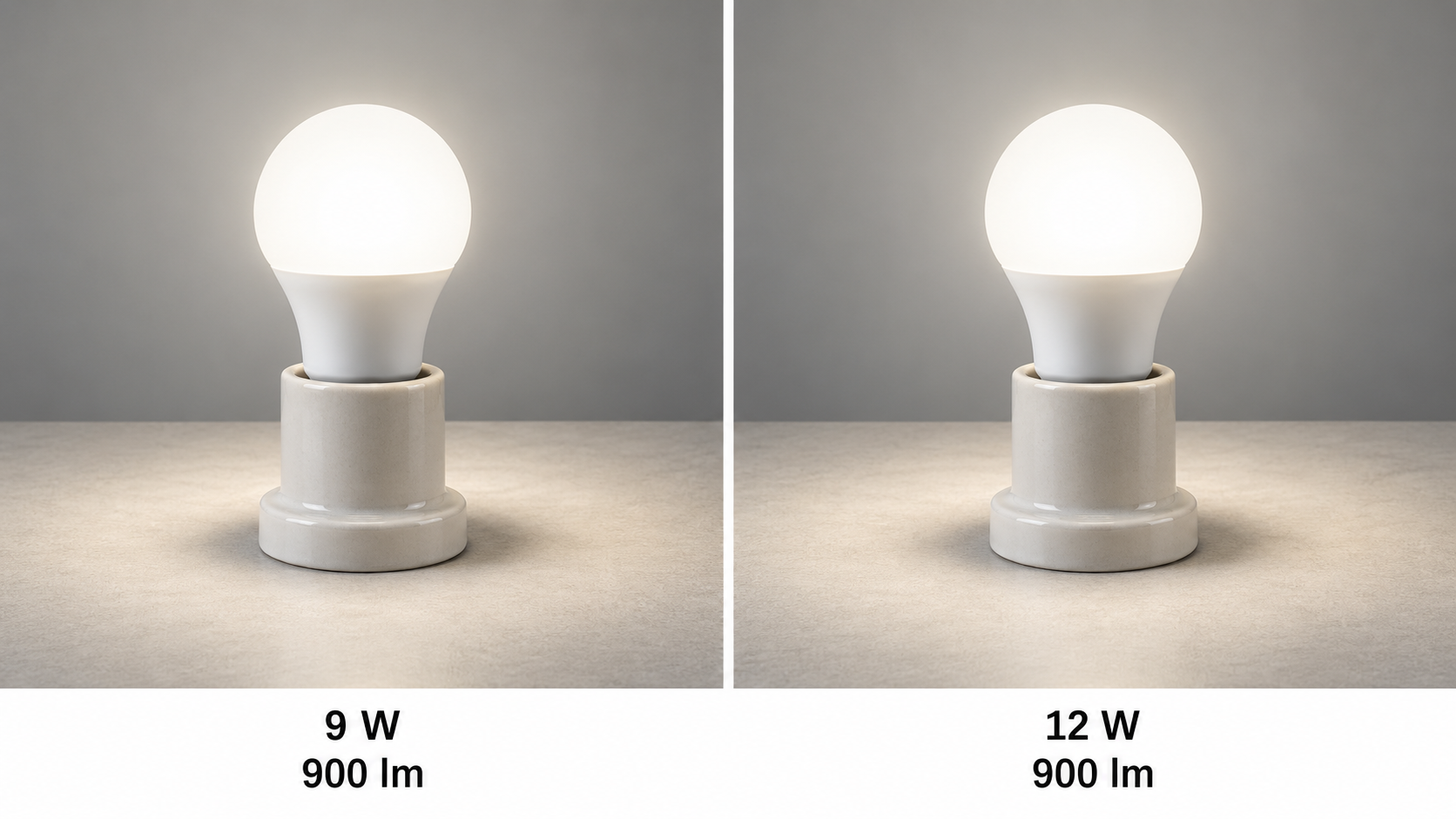
Watts still matter when you compare power consumption. Suppose two bulbs each produce 900 lm, but one consumes 9 W and the other 12 W. Their stated light output is the same, but the first provides it using less electricity. A higher-wattage bulb is therefore not automatically brighter or more efficient.
The ratio of lumens to watts is known as luminous efficacy. In the example above, the 9 W bulb delivers 100 lm/W. You do not need to calculate this every time you shop, but the principle is useful: first choose the amount of light you need, then compare the power consumption of the products that can provide it.
Warm or cool light? What the Kelvin value tells you
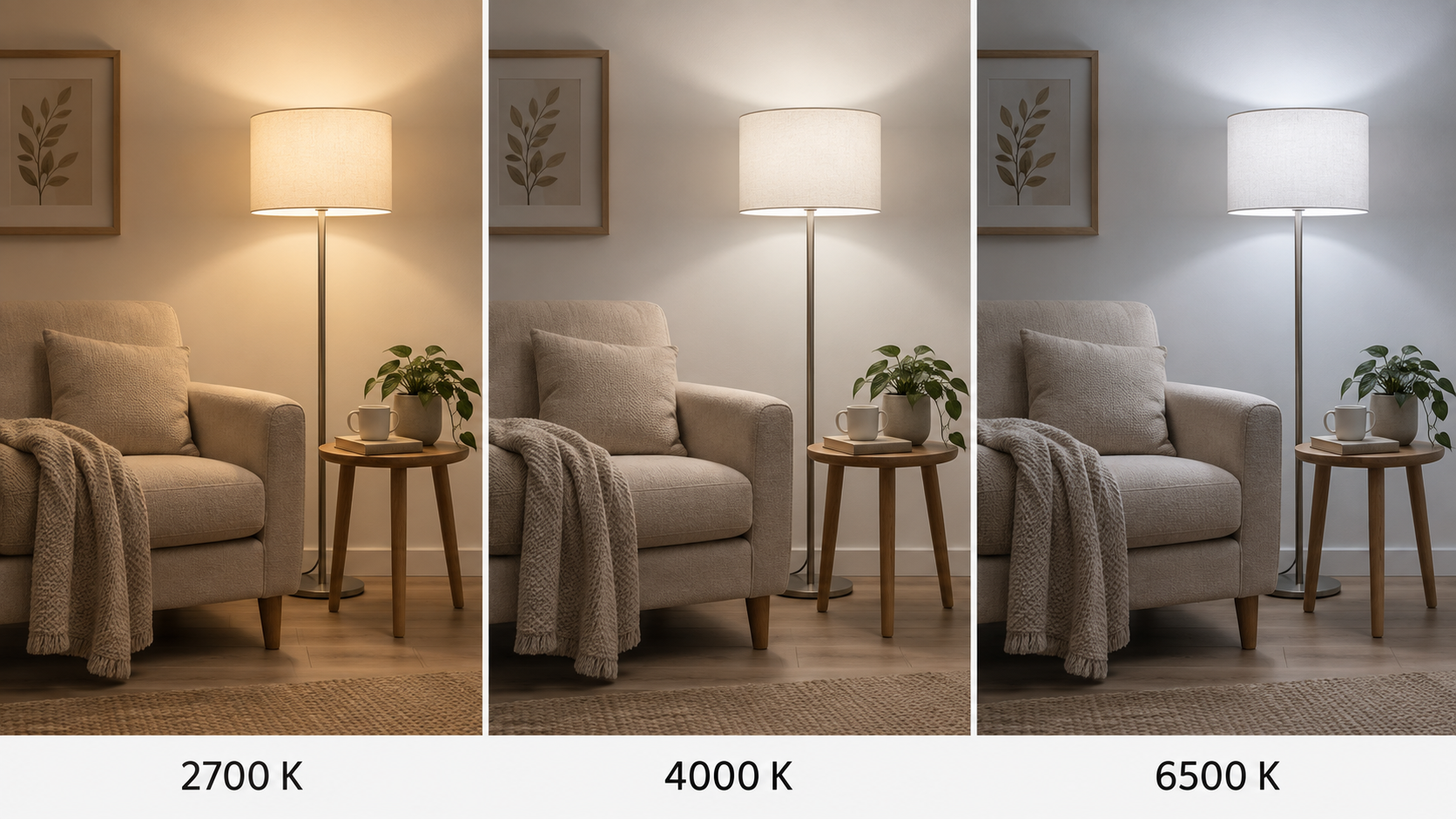
After brightness, the choice that most strongly influences the atmosphere is colour temperature, measured in kelvins and indicated by “K”. This describes the shade of white light: warmer, more neutral or cooler.
At lower values, the light has a warm, slightly yellowish tone. As the value increases, it becomes more neutral and then cooler. The difference is noticeable not just when you look at the bulb, but in the appearance of the whole room.
The table below provides a few starting points. These are not fixed rules for every room: personal preferences and the atmosphere you want to create matter just as much.
Colour temperature | What the light looks like | Where it may be suitable |
|---|---|---|
2700 K | Warm, with a yellowish tone similar to traditional incandescent bulbs. | Bedrooms, table lamps and relaxation areas. |
3000 K | Warm white, slightly less yellow than 2700 K. | Living rooms, hallways, bedrooms and general home lighting. |
4000 K | Neutral white, between warm and cool light. | Kitchens, bathrooms, dressing rooms and workspaces. |
5000–6500 K | Cool white, which may appear slightly bluish towards the upper end of the range. | Garages, workshops, storage areas and other utility spaces. |
In a living room used for relaxing in the evening, 2700 K or 3000 K may create the atmosphere you are looking for. In a kitchen or workspace, you might prefer the more neutral appearance of 4000 K. However, no colour temperature is “better” in every situation, and cool light is not automatically the right choice simply because it looks whiter.
One important misconception to avoid is that more kelvins mean more light. A 2700 K bulb rated at 800 lm can produce the same light output as a 6500 K bulb rated at 800 lm. The difference is the colour of the light, not the stated amount.
When replacing a single bulb in a fixture with several light sources, check the colour temperature of the remaining bulbs. A warm bulb next to a very cool one can create an uneven appearance, even if both have the same base. For a consistent result, choose the same colour temperature and a similar brightness.
How much light is enough for a room?
Once you understand lumens, the natural next question is how many you need for a bedroom, kitchen or living room. But there is no universal answer such as “buy a 1,000 lm bulb for the living room”. The size of the room, the number of light sources and the way light is distributed all matter.
A chandelier with five bulbs rated at 800 lm each has a combined stated light output of 4,000 lm. That is not the same situation as a ceiling fixture with a single 800 lm bulb. Yet even the total does not tell the whole story: the shape of the shade, the direction of the bulbs and the ceiling height influence the result.
Walls and furniture matter too. A room with light-coloured surfaces reflects more light than one with dark walls and furniture. The same bulb may seem sufficient in one space and inadequate in another, even when there is nothing wrong with the product.
This is where the difference between lumens and lux becomes useful. Lumens describe the light output produced by a source, while lux describes the illumination of a surface. A desk lamp can produce the same amount of light but illuminate the desk differently depending on its distance and direction. For reading or working, the lamp’s position therefore matters alongside the bulb’s specifications.
In a living room, combining the main lighting with a floor lamp and a table lamp may feel more comfortable than relying on a single, very powerful fixture. This also means you do not have to use the same lighting for every activity: a quiet evening and a room you are cleaning do not necessarily call for the same level of illumination.

CRI: the detail that affects how you see colours
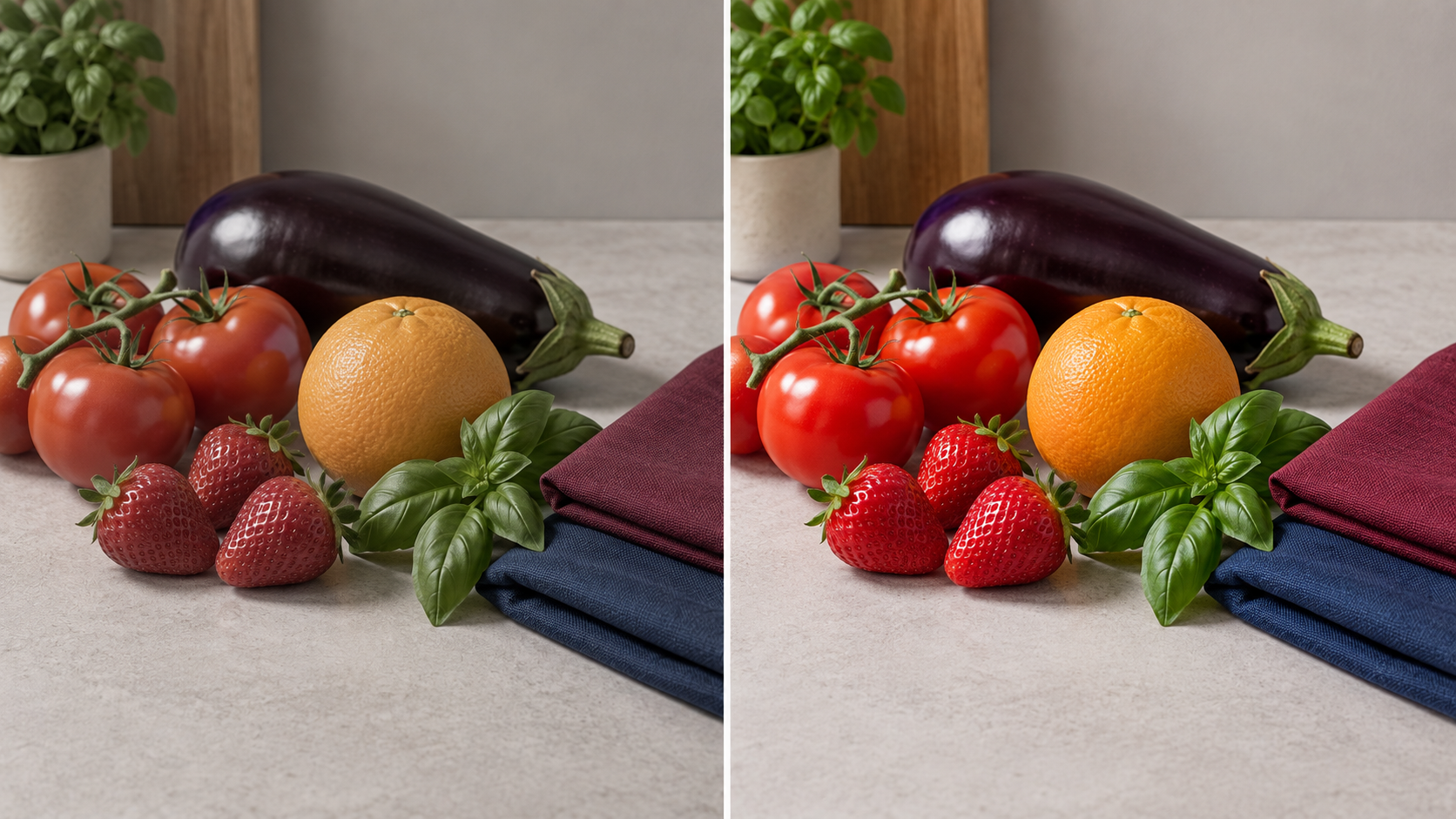
Two bulbs can have similar brightness and the same colour temperature, yet objects in the room may not look identical under their light. The difference may come down to the Colour Rendering Index, commonly abbreviated as CRI.
This describes how naturally the colours of objects appear under a particular light source. The maximum value on the scale is 100, and bulbs with a CRI of at least 80 are very common in home lighting. For areas where shades and colours matter more, it is worth looking for products with a CRI of 90 or higher.
The difference matters in everyday situations. In a dressing room, you want to see the colour of your clothes accurately. In front of a mirror, skin tones matter. In a kitchen, you want food to look natural. In a workshop where you work with materials and colours, this criterion can be even more important.
CRI does not replace your choice of colour temperature or brightness. These are separate characteristics. When comparing bulbs for a mirror, dressing room or work area, check separately how much light they produce, what shade of white they provide and what colour rendering index is stated.
Shape and size matter, even when the base is correct
One detail that is easy to overlook, especially when shopping online, is the bulb’s physical size. Two E27 products can have very different diameters and lengths. A decorative globe bulb may use the same screw base as a standard bulb but still be too large for a compact ceiling light.
The standard bulb shape, often labelled A60, is used in many everyday light fixtures. Candle-shaped bulbs are narrower and suit decorative chandeliers and candelabras. Globe bulbs are often chosen for pendant lights or other fixtures where the bulb remains visible, while tubular shapes appear in certain specialist or decorative applications.
For an enclosed fixture or one with limited space, check the overall length and diameter before ordering. Knowing that the bulb screws into the socket is not enough: it must also fit within the available space.
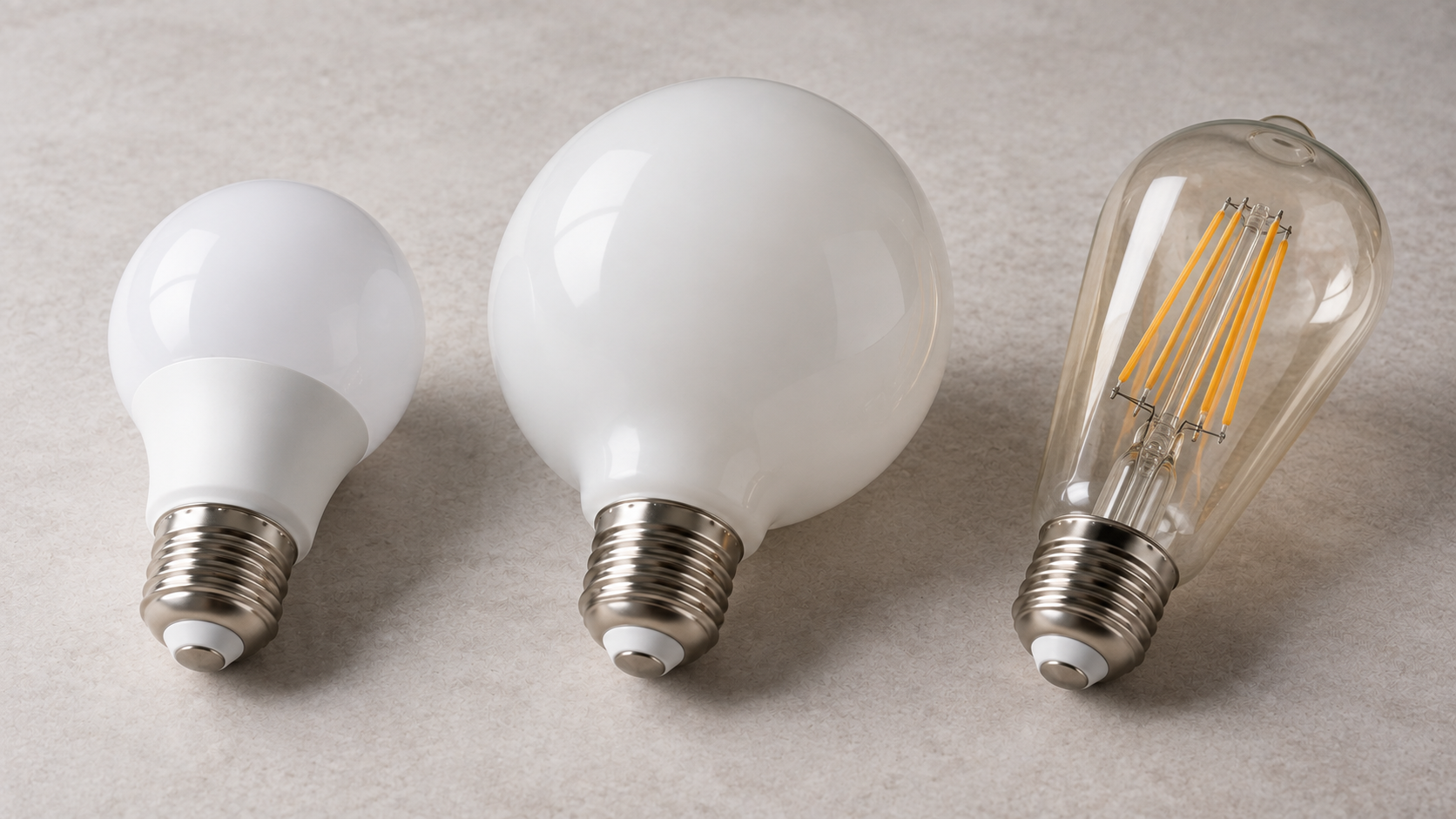
Your choice between a frosted and a clear bulb also matters. A frosted cover diffuses the light and makes the source less harsh when viewed directly. It can be a suitable option for table lamps or fixtures where the light source sits close to eye level.
Clear bulbs are often chosen for their decorative appearance, and LED filament models are a familiar example. The visible strips of light inside resemble the filament of traditional bulbs and can complement a minimalist pendant, an open chandelier or an interior with retro details. Appearance does not replace checking the specifications, though: with a filament bulb, you still need to choose the light output, colour temperature and, where relevant, dimming capability.
With spotlights, check where the light goes as well
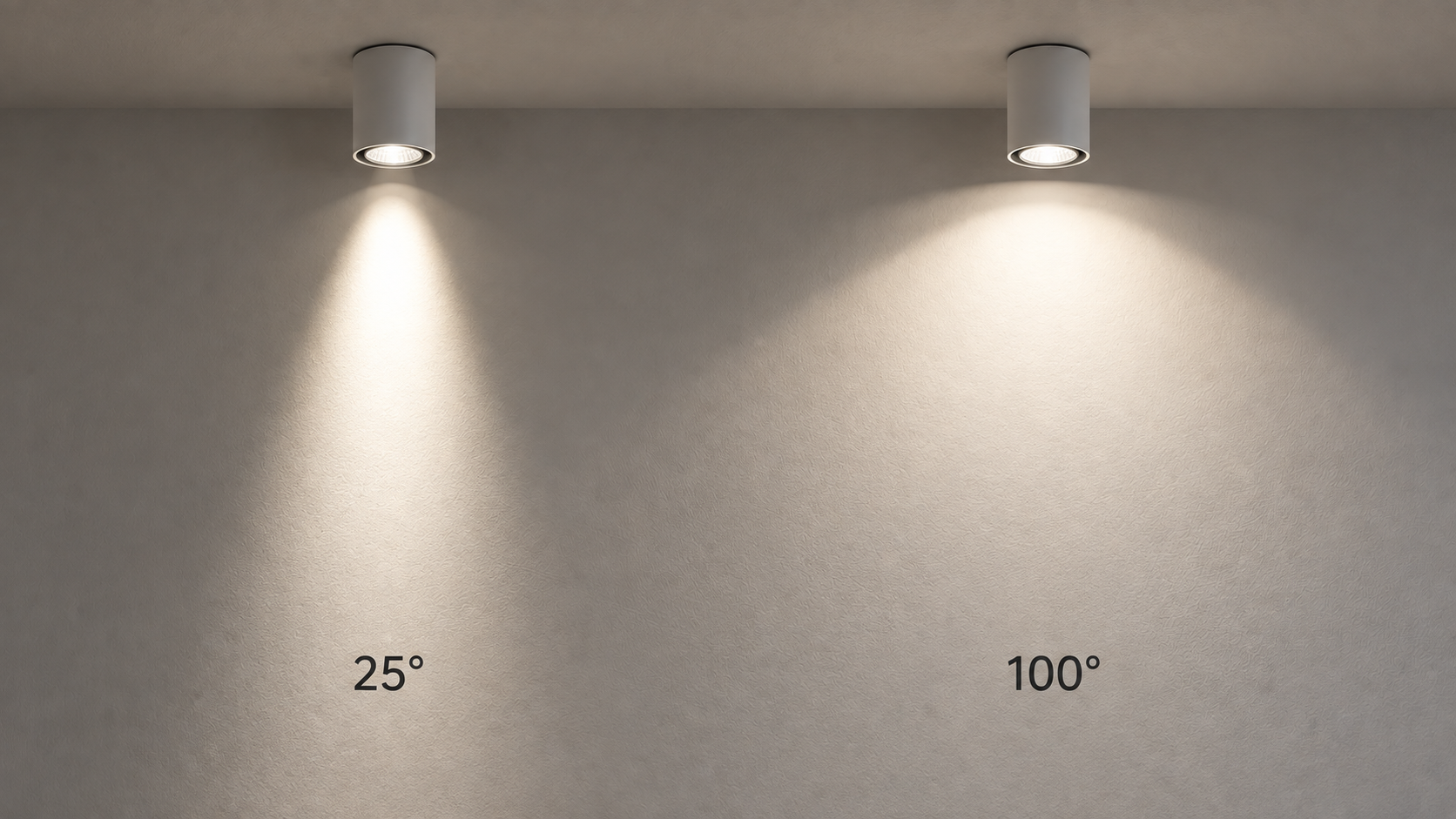
For a spotlight, the amount of light is only part of the decision. The beam angle is just as important. Imagine the light as a cone: a narrow angle concentrates it on a small area, while a wide angle spreads it over a larger surface.
A narrow beam may be suitable for highlighting a painting or a decorative object. For general lighting, a wider angle may be more useful. When installing several ceiling spotlights, the distribution of their beams matters if you want to avoid dark patches between them.
Suppose you find a bulb described as “GU10, 6 W, 600 lm, 4000 K, 100°”. The base tells you where it can be fitted, 6 W indicates its power consumption, and 600 lm describes its light output. A colour temperature of 4000 K means neutral white light, while the 100° angle indicates a relatively wide beam. The effect will differ from that of a spotlight with a 20–30° beam, even if the other specifications are similar.
In other words, two spotlight bulbs can fit the same socket but illuminate the room differently. Choosing a bulb does not end with its base and lumens.
Dimmable lighting or a smart bulb? Choose the features you will actually use
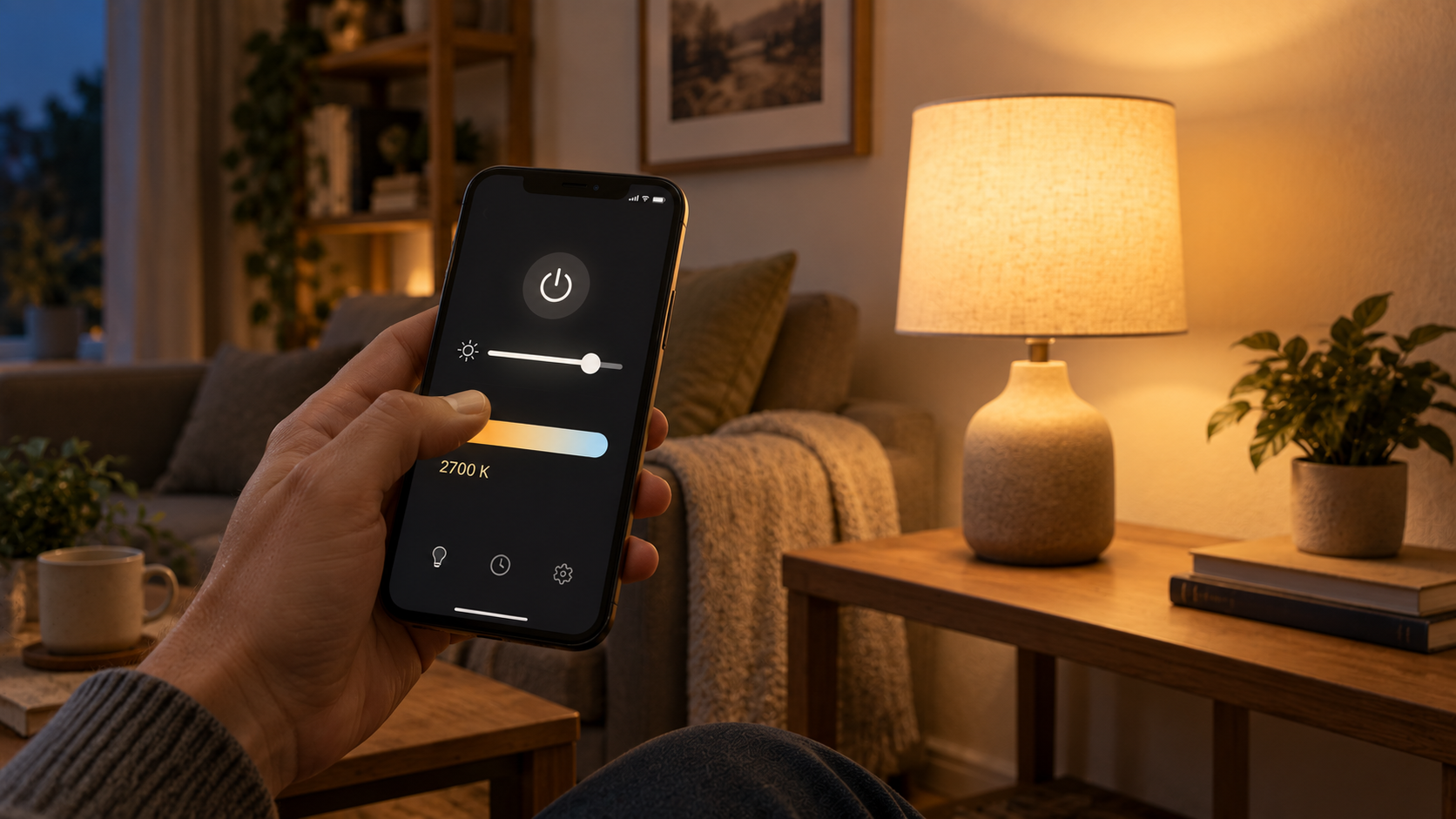
In a room used for several activities, being able to adjust the brightness can be very practical. You can have more light when reading and less when relaxing. For a system with a dimmer, however, you need to choose a bulb marked “dimmable” and check that it is compatible with that particular dimmer.
Not all LED bulbs support this type of adjustment. An ordinary bulb connected to a dimmer may flicker, buzz or work incorrectly, and unsuitable use can affect its lifespan. Nor does the word “dimmable” mean that every combination of bulb and dimmer will work without problems. Compatibility needs to be checked, not assumed.
Smart bulbs offer a different kind of control. Depending on the model, you can switch the light on and off through an app, adjust its brightness, change its colour temperature or set schedules. Some also offer coloured lighting, but the features vary from one product to another.
In product descriptions, you will come across terms such as RGB and RGBW. RGB refers to the use of red, green and blue channels to produce different colours. RGBW also includes a dedicated white-light source. For a bulb with adjustable colour temperature, look for references to CCT adjustment and the available range in kelvins: this tells you which shades of white you can choose between.
Check the connection method too, such as Wi-Fi, Bluetooth or Zigbee, along with compatibility with the smart-home system you use. Do not assume that every smart bulb integrates in the same way.
A smart bulb makes sense when its features match how you actually use your lighting. For a lamp that you simply switch on and off occasionally, a standard bulb may be enough. In a living room where you frequently change the brightness and atmosphere, the additional control may be more useful.
In bathrooms and outdoors, check the entire light fixture
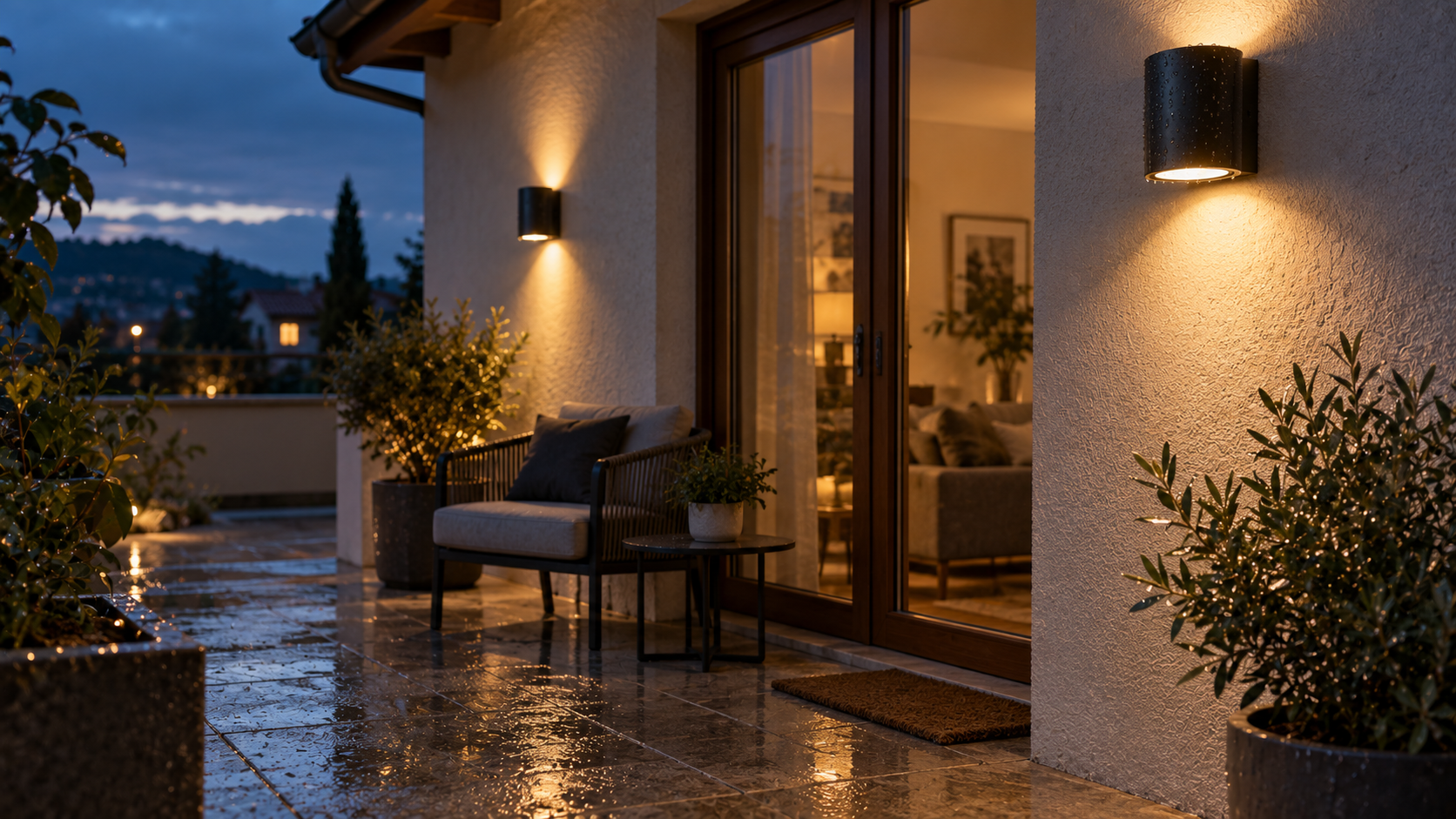
In a bathroom, on a balcony or in a garden, choosing a bulb with the correct base and brightness is not enough. You need to check that the equipment is suitable for the environment in which it will operate.
Ratings such as IP20, IP44, IP54 and IP65 describe protection against the ingress of solid objects and water. It is not enough to choose a number that looks high and assume the issue is resolved. The protection level must suit the installation location, and for outdoor lighting, what matters is the entire light fixture, not just the bulb inside it.
In a bathroom, for example, choosing a pleasant light colour and a good CRI for the mirror area does not replace checking the fixture’s protection rating. These are two different aspects of the same purchase: how it lights the space, and the conditions in which it can be used.
Why heat matters and how to interpret the stated lifespan
LED bulbs are more efficient than incandescent bulbs, but they still produce heat. The electronics in their base warm up during operation, and inside a completely enclosed globe or a poorly ventilated ceiling fixture, temperature can become a problem.
Some bulbs are designed for use in enclosed fixtures; others are not. If your light fixture is enclosed, look for the manufacturer’s guidance on use in “enclosed fixtures”. A bulb with the correct base can still be unsuitable for the conditions inside the fixture.
This also helps explain the stated lifespan. Packaging may show figures such as 15,000, 20,000 or 25,000 hours. At three hours of use per day, 15,000 hours would theoretically mean more than 13 years.
In practice, temperature, ventilation, the quality of the electronics, fluctuations in the electricity supply and repeated switching all influence the result. The stated lifespan is an estimate under certain conditions, not a promise that every bulb will work for exactly that long in any fixture. Suitability for the operating conditions therefore deserves attention alongside the number of hours printed on the box.
Bringing the information together to make a practical choice
Let us return to a description you might encounter when browsing products: “E27 LED bulb, 9 W, 806 lm, 3000 K, CRI ≥80”. At first, it may have looked like a string of technical details. Now it tells you something quite clear: the bulb has a large screw base, consumes 9 W, produces around 800 lm and provides warm white light, with a colour rendering index commonly found in products for the home.
It could be an option for a lamp in the living room, but it is not automatically the answer for every room. You still need to know whether it fits, how many bulbs the fixture uses and what purpose that light serves. For a bedside lamp, you may want more moderate brightness; for a chandelier, the contribution of all the bulbs matters.
In the kitchen, you might choose 3000–4000 K, while paying separate attention to worktop lighting and colour rendering. Around the bathroom mirror, a CRI of 90 or higher may be worth considering. At a desk, neutral light around 4000 K needs to be complemented by a well-positioned task lamp. In a garage or workshop, light distribution and avoiding shadows in the work area remain important alongside light output and colour temperature.
These are starting points, not fixed formulas. A home does not need the same light in every room, because the activities and the atmosphere you want are not the same everywhere.

The right bulb is not necessarily the one with the highest wattage, the coolest light or the longest list of features. It is the one that suits the fixture and the way you use the space.
When looking for light bulbs on IVO.md, start with that specific need. Check the base, voltage and dimensions, then compare the amount and colour of the light. Other specifications become important depending on the situation: colour rendering around a mirror, beam angle for spotlights or dimmer compatibility in a room with adjustable lighting.
The aim is not to memorise every abbreviation on the packaging, but to choose lighting that makes your home a place you enjoy spending time in.