Choosing an electric water heater means understanding how your household uses hot water, not simply matching a number of litres to a number of people. The available wall space, electrical installation, water quality and maintenance arrangements matter too.
A well-chosen model should provide enough hot water during the busiest part of the day, fit safely into your home and remain practical to maintain. Extra capacity and smart features are useful only when they address a real need.
Start by choosing the right kind of water heater
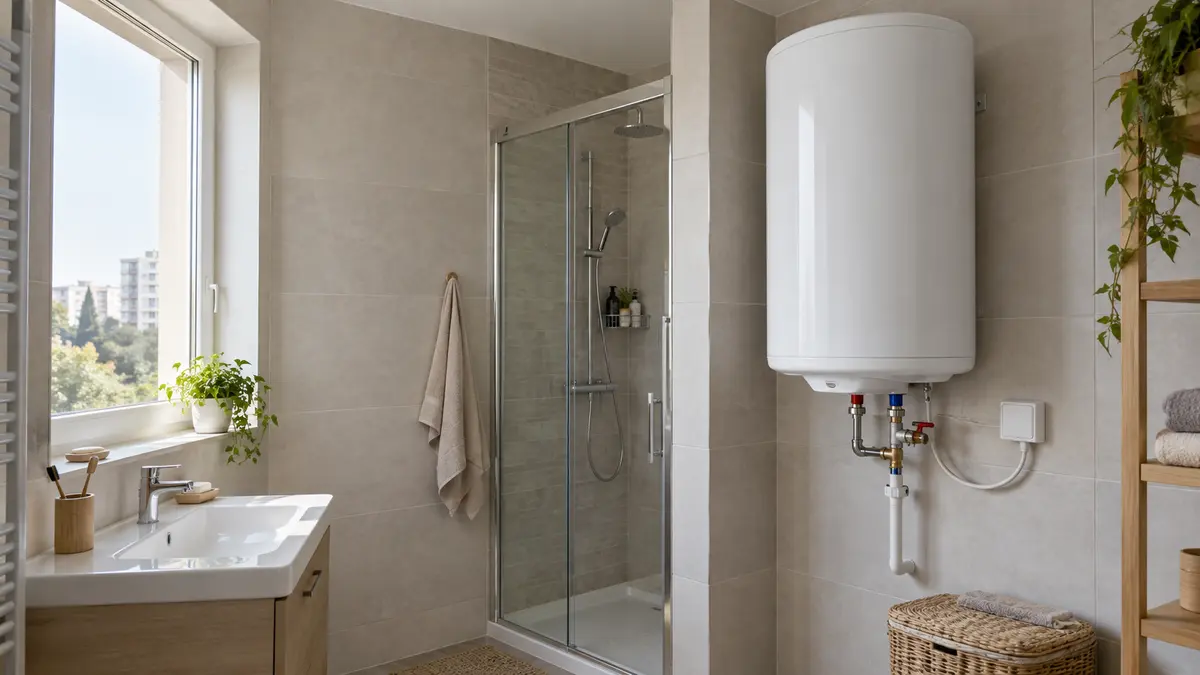
This guide focuses on electric storage water heaters: appliances that heat water in an insulated tank and keep it ready for use. They supply domestic hot water for washing, showering and kitchen tasks. They are not the same as electric central-heating boilers, which heat water circulating through radiators or underfloor heating.
A storage heater builds up a reserve gradually. Many domestic models use heating elements rated at around 1.5–3 kW, allowing them to heat a substantial quantity of water without demanding all the necessary energy at once. Once that reserve is depleted, however, reheating takes time.
An instantaneous electric heater works differently. It heats water as it passes through, without keeping a large tank hot. The trade-off is electrical demand: heating a flow of 8 litres per minute from 10°C to 40°C requires roughly 17 kW before allowing for losses. A small instantaneous heater intended for a washbasin is therefore not automatically a replacement for a storage heater serving a shower. Higher-output models may require a substantially different electrical connection, including three-phase power.
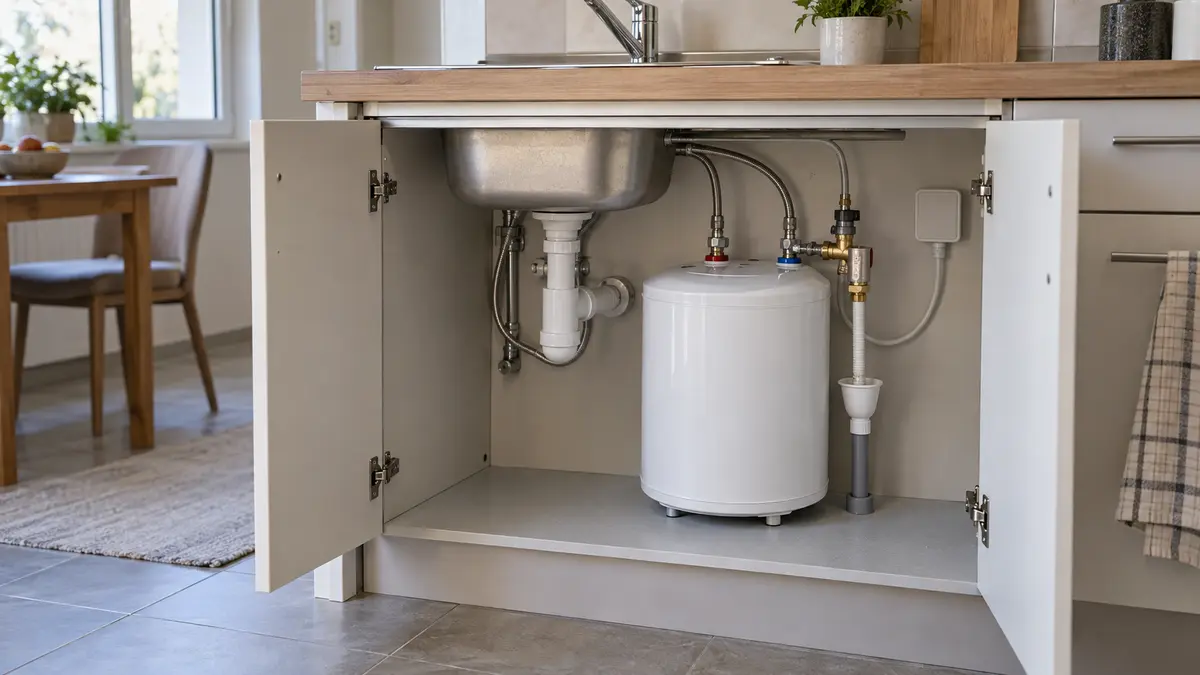
For one distant sink, a small point-of-use storage heater can be more appropriate than a large bathroom tank. Check whether it is pressurised or open-vented: open-vented models require a compatible special tap and must not be connected as though they were ordinary pressurised appliances.
Heat-pump water heaters are another option. They move heat from the surrounding air into the water and can use less electricity than conventional resistance heating, but need suitable installation conditions, including adequate air space and operating temperatures.
Size the tank for your busiest period, not just your household
Two people taking short showers several hours apart place a very different demand on a heater from two people showering consecutively. A bath, a high-flow showerhead or simultaneous kitchen use can change the calculation again.
Begin with the amount of mixed water you actually use. An eight-minute shower at 8 litres per minute consumes 64 litres. At 12 litres per minute, the same shower lasts no longer but uses 96 litres. These are illustrative calculations, not assumptions about every shower.
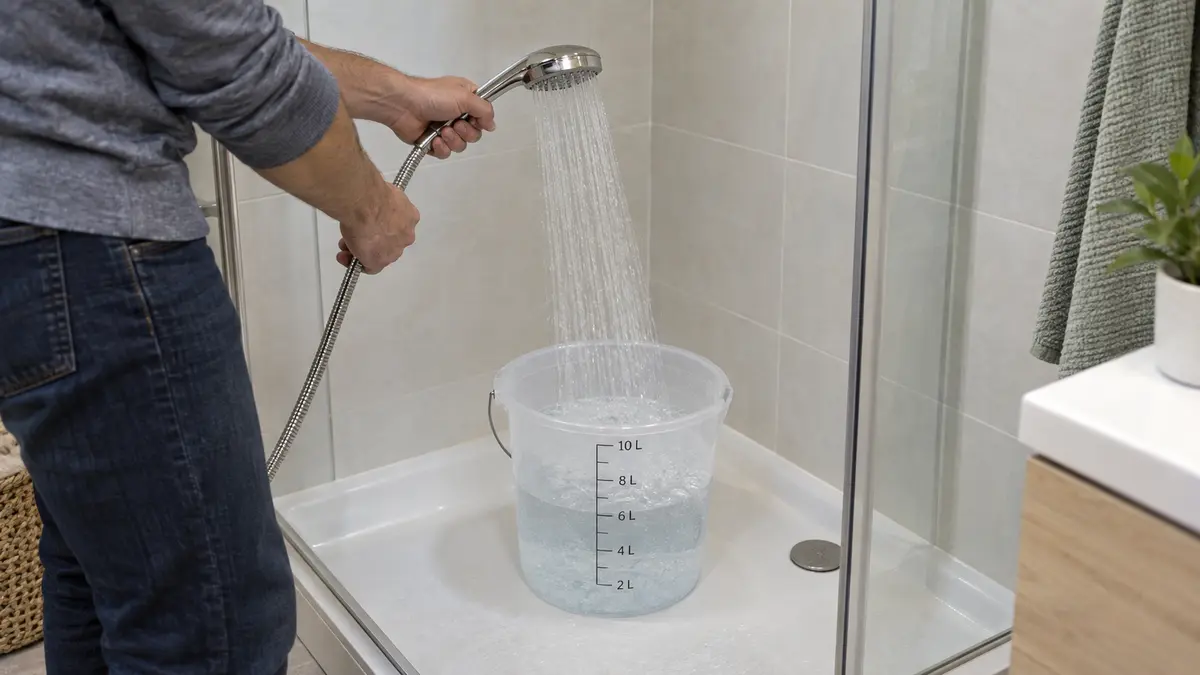
You can estimate your own flow by collecting water in a marked container for a measured period, using cool water and keeping electrical devices away from splashes. Collecting 4 litres in 30 seconds, for example, corresponds to 8 litres per minute.
Tank capacity is not the same as shower-water capacity. Water stored at a higher temperature is mixed with cold water before use. In an ideal calculation, 50 litres stored at 60°C could produce about 83 litres at 40°C when mixed with incoming water at 10°C. Real appliances do not necessarily deliver that entire theoretical amount at a steady, useful temperature.
This is why V40, where provided, is worth finding in the technical information. It describes the quantity of mixed water available at 40°C under specified conditions. It can be more informative than the tank’s nominal size, although you should still check the test conditions and temperature setting.
The following ranges are starting points for investigation, not guaranteed household ratings.
Pattern of use | Storage capacity to investigate | What needs particular attention |
|---|---|---|
A washbasin or light kitchen use | 5–30 litres | Whether it serves one outlet, tap compatibility and recovery time |
One modest shower at a time | 50–80 litres | Shower duration, flow rate and declared V40 |
Two modest showers close together | 80–100 litres | Combined demand and how much reheating occurs between them |
Several consecutive showers or regular bath use | 120–150 litres or more | Actual water consumption; long showers and large baths may require substantially more |
The lower end of a range is only sensible when the heater’s usable output matches the intended demand. A nominal 80-litre tank is not a promise of two long showers.
Also distinguish the model name from actual storage volume. A number in a product name may identify a size category rather than the exact amount of water inside. Check the declared capacity in the manufacturer’s technical documentation.
Colder incoming water in winter increases the energy needed for reheating and reduces the amount of mixed warm water obtainable from a given hot-water reserve. Leave a reasonable margin rather than sizing a tank to the last theoretical litre.
Power determines recovery speed—not automatically a higher bill
Capacity tells you how much water can be stored. Power tells you how quickly the heating element can add heat.
A 2 kW element generally heats the same quantity of water faster than a 1.5 kW element. It does not automatically use more electricity to complete the same heating task: the higher-powered element runs for less time. For conventional resistance heaters, heating the same water through the same temperature rise requires approximately the same amount of heat, before differences in losses and control behaviour.
These calculated examples show the relationship. They assume heating the entire stated water volume from 10°C to 60°C, with continuous full power and no water being drawn off.
Actual water volume | Heat required by the water | Ideal time at 1.5 kW | Ideal time at 2 kW |
|---|---|---|---|
50 litres | About 2.9 kWh | About 1 hour 56 minutes | About 1 hour 27 minutes |
80 litres | About 4.7 kWh | About 3 hours 6 minutes | About 2 hours 20 minutes |
100 litres | About 5.8 kWh | About 3 hours 53 minutes | About 2 hours 54 minutes |
These are theoretical comparisons, not product test results. Published heating times can differ because of actual capacity, temperature conditions, heat losses and the way the appliance controls its elements.
Be especially careful with “shower ready” claims. A heater may have prepared enough hot water for one shower without having heated its entire storage volume. Some twin-tank designs deliberately prioritise a smaller portion of water.
For a household that uses hot water in separate morning and evening periods, moderate power may be sufficient. Consecutive showers make recovery speed more important. In either case, check the appliance’s maximum electrical input rather than assuming that two heating elements always operate simultaneously.
Choose a shape that fits—and an installation position that is permitted
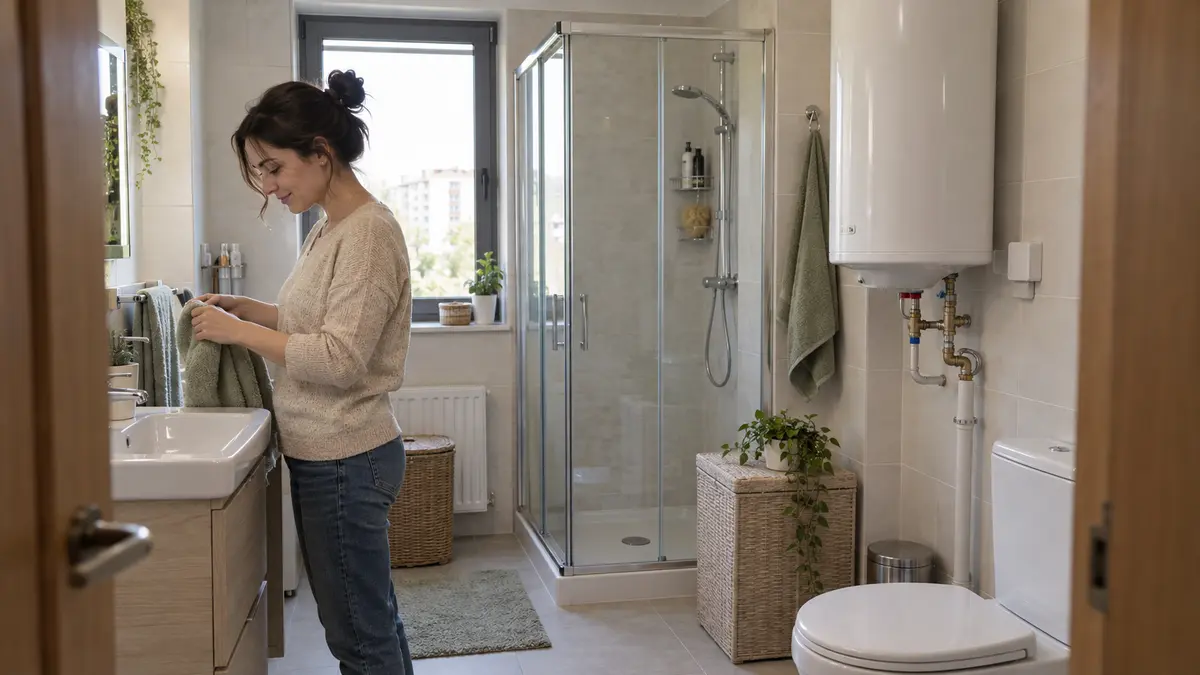
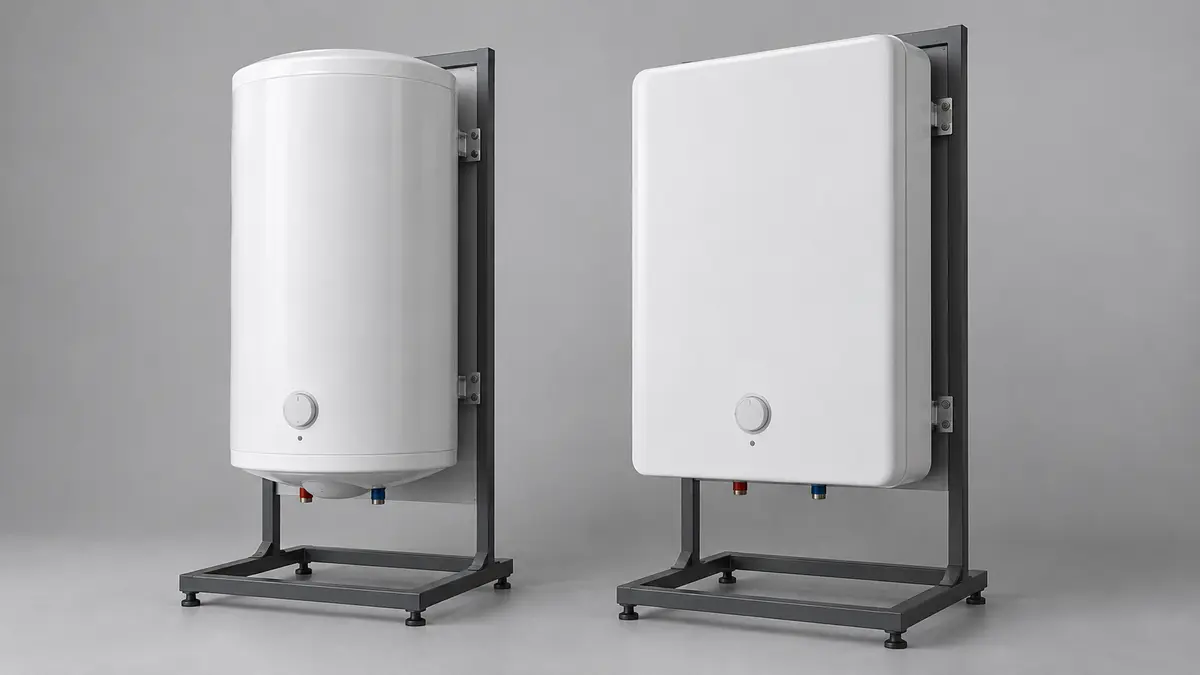
A cylindrical heater may be relatively narrow but project noticeably into the room. A flat model usually reduces depth by using more wall width, height or a different internal tank arrangement. A “slim” cylinder often has a smaller diameter but is taller.
None of these shapes is automatically more efficient. Their main immediate difference is how they occupy your room.
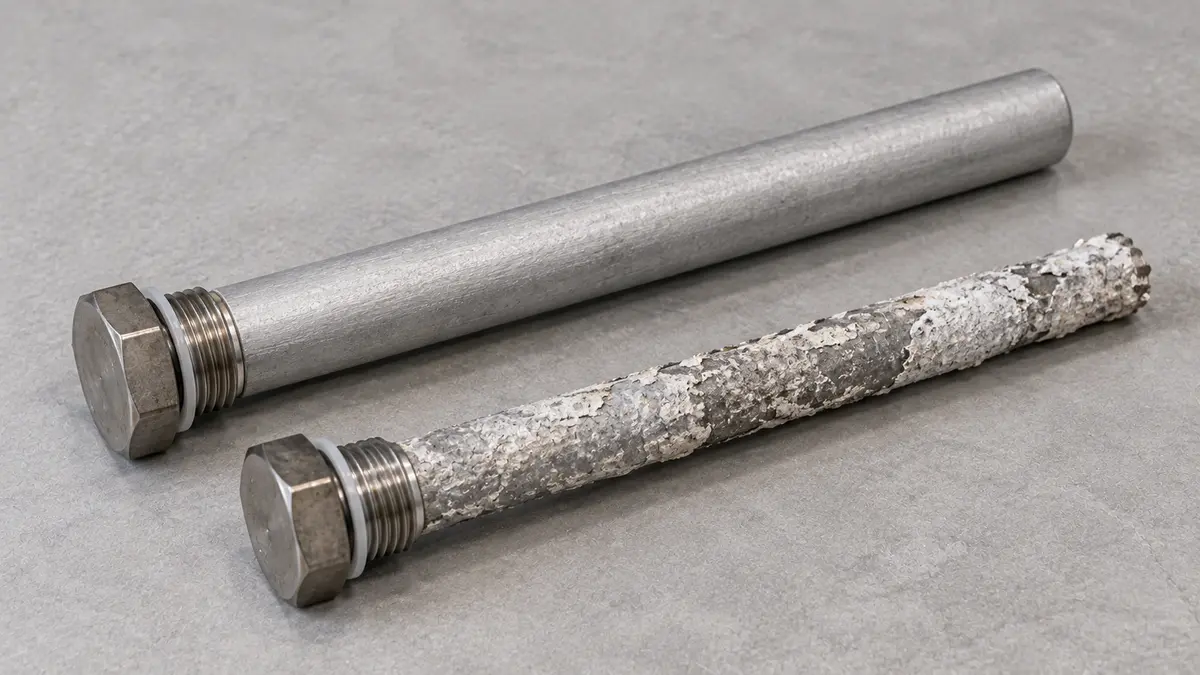
Measure the available height, width and depth, including pipe connections and the space needed to open nearby doors. Then check the service clearances. A heater that fits tightly into a cupboard may be difficult to repair if there is no room to remove the heating assembly or anode.
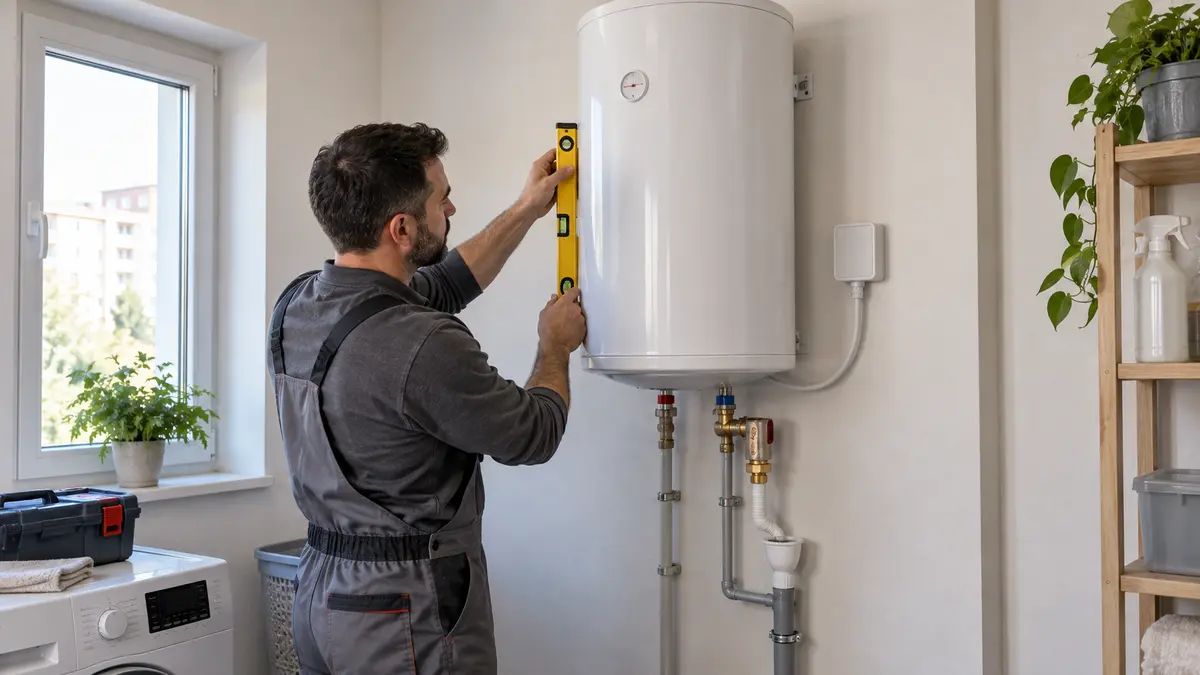
Installation orientation is not a styling choice. A vertical-only model must not simply be turned sideways. Internal pipe positions and temperature sensing depend on the intended arrangement. Models approved for horizontal installation may also specify which side the connections must face.
The supporting structure matters just as much. An 80-litre water content adds approximately 80 kg before counting the appliance itself. A lightweight partition cannot be assumed to support that load merely because suitable-looking brackets are available. Have the installer assess the wall and fixings.
Look beneath the casing: tanks, heating elements and corrosion protection
A polished exterior tells you little about the water-contacting parts inside. Look specifically for the material of the inner tank, not just the outer casing.
Enamelled steel tanks use a protective internal coating, commonly described as enamel or glass lining. Many also use a magnesium anode—a replaceable component that is consumed while helping protect the tank against corrosion.
Stainless-steel tanks take a different approach, but the words “stainless steel” do not establish a universal service life or remove the need to follow the manufacturer’s water-quality and maintenance requirements. Likewise, a “titanium” description may refer to a coating or protective system rather than a tank made entirely from titanium.
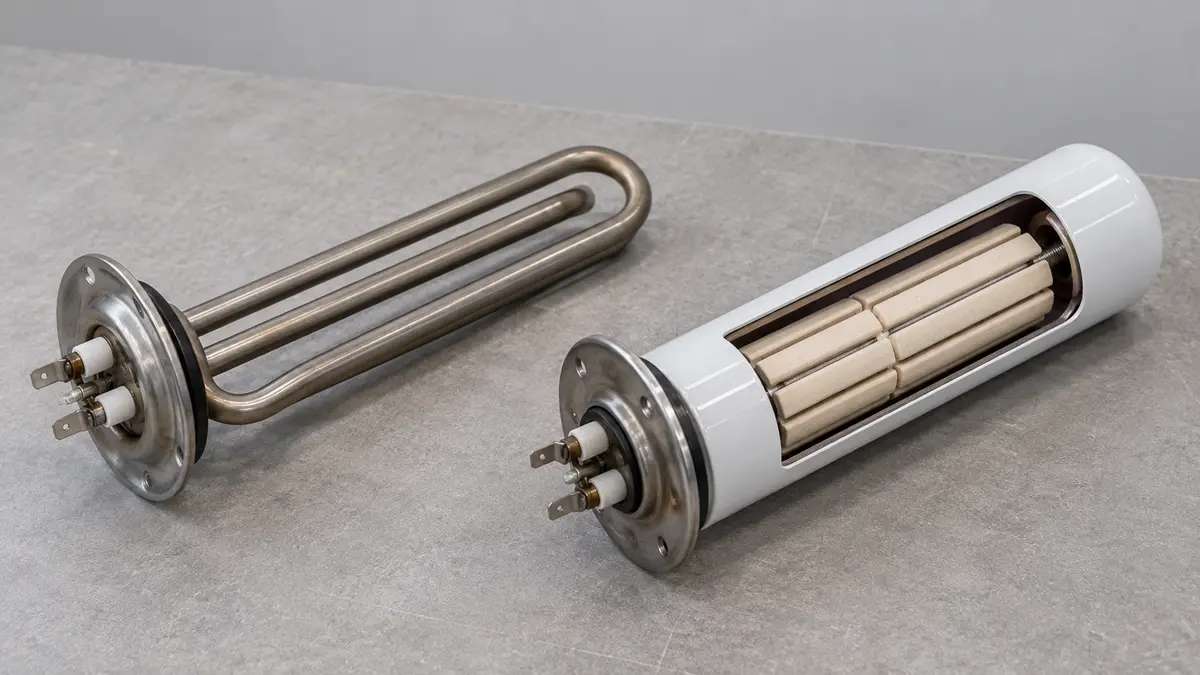
The heating element deserves separate attention. A conventional immersed, or “wet”, element has an outer metal sheath in direct contact with the water. This does not mean that exposed live electrical wire touches the water.
A dry element sits inside a protective pocket or sleeve, separating the heating element itself from the stored water. Some designs use ceramic components and allow element replacement without draining the tank. That can make servicing easier, particularly where limescale is a recurring concern.
However, dry-element construction does not make the whole appliance immune to scale or corrosion. Deposits can still form on water-contacting surfaces, and the tank’s protective system still needs attention. “Dry” also does not mean the heater may safely operate with an empty tank.
Water conditions vary between supplies, so do not assume every home in Moldova has the same hardness. Ask about your local water and any requirements applying to the shortlisted heater. Frequent kettle scale is a reason to investigate, not a precise water analysis.
Before buying, find out who can service the appliance locally and whether replacement elements, thermostats, seals and anodes are available. A long tank warranty is less reassuring when routine servicing is difficult to arrange.
Read the warranty conditions as well as its headline duration. Tank cover may differ from cover for electrical components, while installation records and maintenance requirements may matter. Follow the model’s inspection schedule rather than treating anode replacement as a universal once-a-year or once-every-two-years rule.
Compare running costs through losses and usage—not the “eco” button
A conventional electric heater has two main heating jobs: warming replacement water after use and replacing heat that escapes while water is stored.
The second is described as standing or standby loss. Better insulation can reduce it, but comparisons need matching conditions. A figure measured with water at 65°C is not directly comparable with one measured at a lower temperature.
Even small daily differences accumulate. A hypothetical difference of 0.5 kWh per day amounts to roughly 183 kWh over a year. Multiplying that by the electricity rate on your own bill gives an approximate cost difference in MDL—provided the quoted losses represent comparable conditions.
Where an EU-style energy label is supplied, look beyond the efficiency letter. The declared load profile, such as M or L, describes a standardised hot-water demand pattern used in the assessment. Compare models intended for comparable demand, and remember that annual consumption on a label is not a forecast of your household’s exact bill.
Timers and learning modes can reduce unnecessary heating by matching operation to a routine. Their usefulness depends on how predictable that routine is. A household with changing shifts and occasional guests may prefer straightforward manual control over an aggressive automatic schedule.
Do not assume night-time electricity is cheaper unless your actual supply contract provides different time-based rates. Nor should an external timer or smart plug be added without checking manufacturer compatibility and electrical suitability: interrupting power can interfere with hygiene cycles or protective functions on some models.
A larger tank can be worthwhile when its reserve is used. Keeping substantially more water hot than the household needs is not automatically good value, even with an impressive display.
Keep storage temperature separate from shower temperature
Water that is comfortable at the shower is not necessarily being stored at that temperature.
A storage temperature of 60°C is a common reference in temperature-based Legionella control. Legionella bacteria can grow in inadequately managed water systems. Some appliances incorporate automatic thermal-disinfection cycles, but their operating conditions and limitations are model-specific.
Follow the manufacturer’s instructions and the installer’s recommendations rather than keeping the tank permanently lukewarm simply to reduce electricity consumption. Do not disable a hygiene function without understanding the consequences.
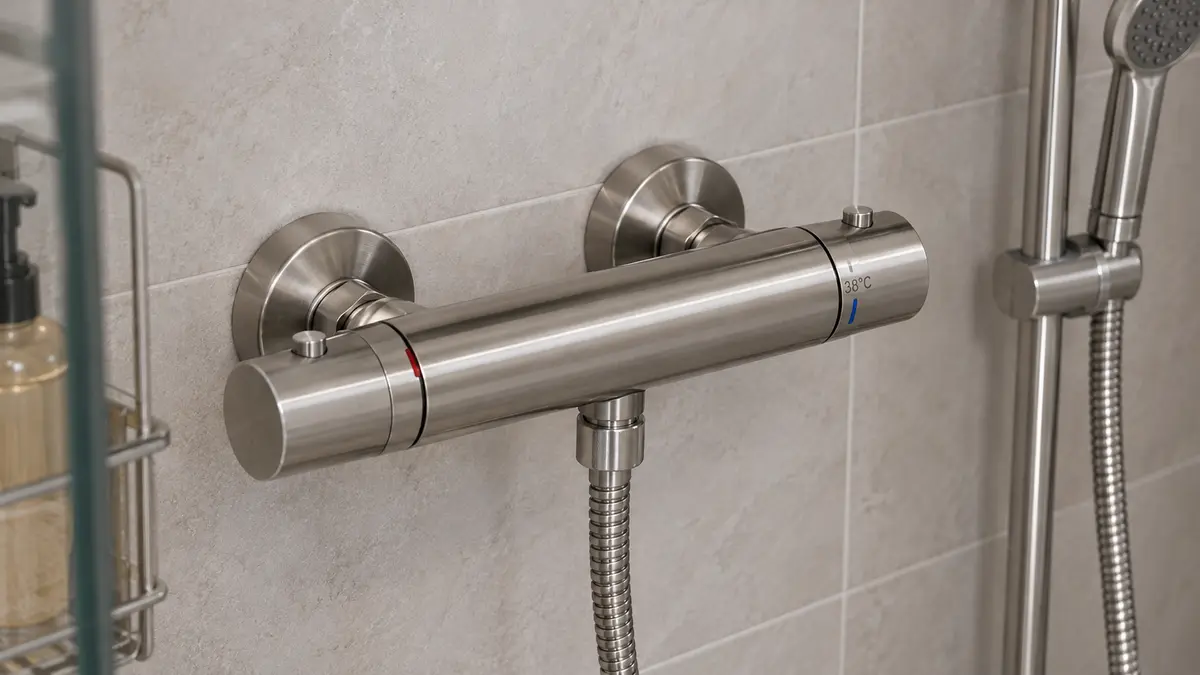
At the same time, water at storage temperature can scald. A thermostatic mixing valve blends hot and cold water and regulates the delivered temperature, allowing the storage system and the outlet to serve different purposes. Suitable temperature control is particularly important where children, older people or anyone with reduced sensitivity will use the water.
A digital temperature display does not by itself provide protection at every tap. Discuss the complete arrangement with the installer, including what happens during any high-temperature hygiene cycle.
Include installation and servicing in the purchase decision
The appliance price is only part of the cost. Depending on the installation, you may also need mounting work, electrical alterations, suitable safety fittings, pressure control and a safe drainage route.
An electrician should check the supply, protective earthing, circuit protection and residual-current protection appropriate to the installation. A heater should not be connected through an improvised extension lead because the nearest socket is inconvenient.
For a pressurised tank, the safety assembly and expansion arrangements are essential. Small discharges during heating can be normal on some systems, but persistent or unusual discharge deserves professional attention. Never block a safety-valve outlet to stop a drip. The installer must provide the required fittings and a suitable discharge route.
Also consider protection against leaks and freezing. A utility cupboard in a heated apartment presents different conditions from an unheated outbuilding. The manual and professional assessment should determine what is suitable; a general buying guide cannot establish that a particular wall, circuit or pipe arrangement is safe.
Bring the specifications back to your own routine
Imagine a hypothetical heater with a confirmed actual capacity of 80 litres, 2 kW maximum input, vertical installation and a dry heating element. For two adults who usually shower at different times, it could be a sensible starting point—provided its usable hot-water output, dimensions and installation requirements match their home.
Those same specifications do not establish that it will comfortably supply two long showers back to back. A high-flow showerhead, colder incoming water or simultaneous kitchen use could change the choice. Equally, a larger heater might provide no meaningful advantage if demand is modest and there is ample recovery time.
The most useful comparison is therefore between your busiest period of hot-water use and the appliance’s documented ability to meet it. Once that is clear, shape, maintenance access, standing losses and controls become easier to weigh.
You can explore electric water heaters on IVO with those priorities in mind. Start with suitable capacity and installation, then compare the details that will affect daily use. The right model is the one that provides dependable hot water without asking you to pay for size or complexity you will rarely need.