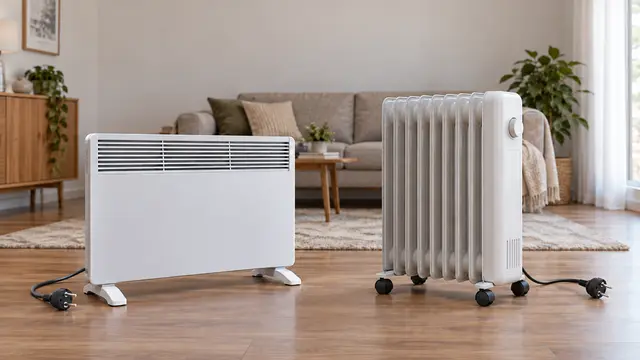
A split air conditioner can make these situations much more manageable. Choosing one, however, involves more than deciding between 9,000 and 12,000 BTU. The right system needs to suit the room, distribute air comfortably, operate efficiently at the output you actually need and fit an installation that makes sense for your home.
The most useful starting point is not a brand or an energy rating. It is deciding exactly where, when and why you need cooling.

Decide which rooms you want to cool
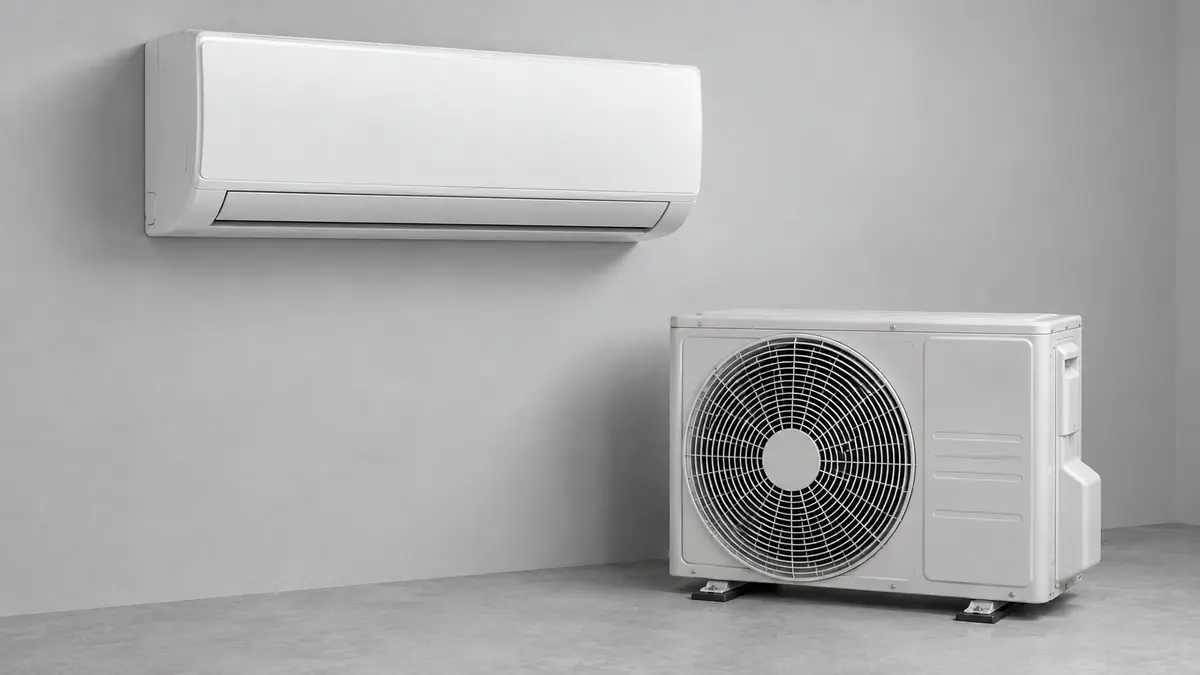
A conventional split air conditioner has two main parts: an indoor unit that circulates room air and an outdoor unit containing the compressor. Refrigerant travels between them through connected pipework, carrying heat out of the home during cooling. Electrical connections and a route for condensation water are also part of the installation.
The familiar wall-mounted indoor unit usually serves the room in which it is installed. It is not a whole-home ventilation system, and its refrigerant pipes do not bring fresh outdoor air into the room.
This matters when planning cooling for an apartment. A powerful unit in the hallway may make the hallway cold without making closed bedrooms comfortable. An open doorway allows some air exchange, but it does not provide the same control as an indoor unit in the room where you sleep.
For several rooms, the main options are separate single-split systems or a multi-split system, where several indoor units connect to one outdoor unit.
Configuration | Where it makes sense | Main consideration |
|---|---|---|
One single-split system | One bedroom, living room or genuinely open-plan space | Other rooms will not receive the same temperature control |
Several independent single-split systems | Rooms needing separate operating schedules or greater independence | More outdoor units and installation positions are required |
One multi-split system | Several rooms where outdoor space is limited | Available outdoor-unit capacity is shared between operating rooms |
A multi-split can provide different temperature settings in different rooms, but typical domestic systems require the active units to use the same general mode: heating or cooling. Their simultaneous output also depends on the approved indoor–outdoor combination, not simply the sum of the indoor-unit ratings.
Before comparing prices, check what the listing includes. An indoor unit is not necessarily a complete air conditioner. Confirm the exact matched indoor and outdoor models, whether both are supplied, and whether installation is included or quoted separately.
Choose capacity for the room’s heat gain, not just its floor area
Air-conditioning capacity describes how quickly a system can remove heat. Product listings commonly express it in BTU/h, meaning British thermal units per hour, although the “per hour” is often omitted.
The equivalent metric figures make these capacity classes easier to compare.
Common advertised capacity | Approximate cooling output |
|---|---|
9,000 BTU/h | 2.6 kW |
12,000 BTU/h | 3.5 kW |
18,000 BTU/h | 5.3 kW |
24,000 BTU/h | 7.0 kW |
These are unit conversions, not room-size recommendations. Manufacturers may also round capacity classes, so the technical specification takes precedence over the headline description.
Most importantly, cooling output is not electrical consumption. A system providing 3.5 kW of cooling does not necessarily draw 3.5 kW from the electricity supply. It moves heat rather than simply converting electricity into cooling, and its actual power input varies with operating conditions and compressor output.
Floor area is useful, but it cannot describe the whole cooling requirement. Imagine two hypothetical rooms, each measuring 20 m². One is shaded, insulated and surrounded by other apartments. The other sits beneath the roof, has a large west-facing window and contains a computer used throughout the afternoon. Their floor areas match; their heat gains do not.
A proper assessment considers ceiling height, glazing, orientation, shading, insulation, roof exposure, occupants and heat-producing equipment. It should also account for connected spaces that you genuinely intend to cool.
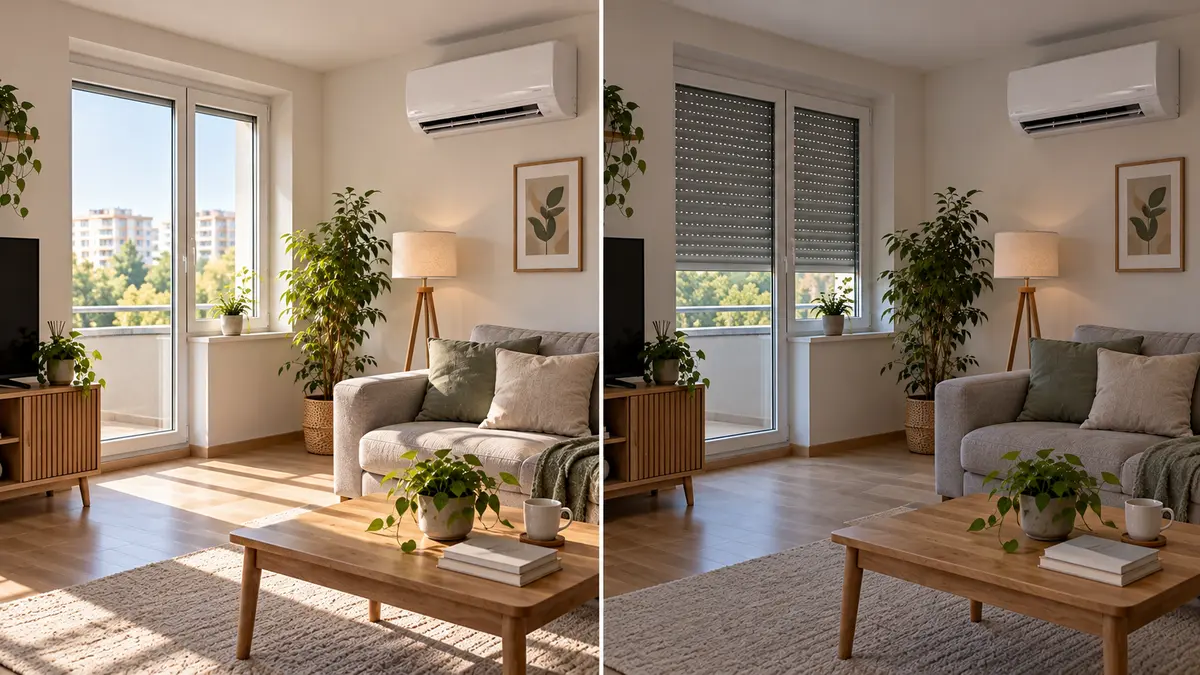
Treat “suitable for up to 35 m²” as preliminary guidance rather than a guarantee. Ask the installer to explain the estimated cooling load and confirm that the proposed system can meet it under the expected conditions. External shading and improvements to the building can sometimes reduce that load before you spend money on a larger appliance.
Understand what an inverter changes
An inverter system adjusts compressor speed to vary its output. Instead of relying only on repeated full-output starts and stops, it can reduce its effort as the room approaches the selected temperature.
In everyday use, that can mean steadier comfort and more efficient operation when the room needs only modest cooling. This is particularly relevant at night, when the heat gain may be much lower than during a sunny afternoon.
However, an inverter does not make oversizing harmless. Every system has a lower limit below which it cannot continue reducing output. If even its minimum capacity is too high for the room, it may still switch on and off. Excessive cycling can compromise temperature control and moisture removal.
For a small bedroom, ask about the minimum cooling capacity as well as the nominal figure. Compare those values under equivalent conditions. A larger model with a higher maximum output is not automatically better at maintaining a comfortable room overnight.
The useful question is not just “Can it cool the room quickly?” It is also “Can it settle into gentle operation once the room is comfortable?”
Read the efficiency label beyond the letter
When a product carries the European seasonal energy label, look separately at cooling and heating. An A+++ cooling rating does not necessarily mean the same rating applies to heating.
The key cooling figure is SEER, the seasonal energy efficiency ratio. It describes efficiency across standardised cooling-season conditions rather than at one operating point. A higher value indicates greater seasonal efficiency when comparing products assessed under the same system.
For heating, the corresponding figure is SCOP, the seasonal coefficient of performance. Heating data can be declared for different climate conditions. A warmer-climate SCOP should not be compared directly with another model’s average-climate figure, nor treated as a prediction for a winter in Moldova.
A simplified example shows what the numbers mean. Suppose two hypothetical systems each provide 1,400 kWh of useful cooling over a season. At seasonal efficiencies of 7 and 5, the corresponding electricity use would be about 200 and 280 kWh. That illustrates the relationship between cooling delivered and electricity consumed; it is not a forecast for a particular apartment.
The annual consumption printed on a label is also based on standardised assumptions. Your hours of use, temperature setting, weather, shading and installation will influence the actual result.
Higher efficiency matters more when the appliance runs frequently. For occasional cooling, a large purchase-price premium may be difficult to recover through electricity savings alone. For daily summer use and regular heating, efficiency deserves greater weight. Any calculation in MDL should use your own electricity tariff and a realistic estimate of use.
Treat winter heating as a separate buying decision
A reversible split air conditioner can work as an air-to-air heat pump, moving heat from outdoors into the home. This can be useful on cool spring evenings or autumn mornings, but occasional heating and dependence throughout winter are different requirements.
An advertised statement such as “heating down to −20°C” describes an operating limit. It does not, by itself, tell you how much heat the appliance can deliver at that temperature or how much electricity it will need.
For serious winter use, request heating-capacity and power-input data at low outdoor temperatures. The installer should compare the available output with the home’s heat loss at an appropriate local design temperature. Cooling capacity alone cannot establish whether the system will provide sufficient winter heating.
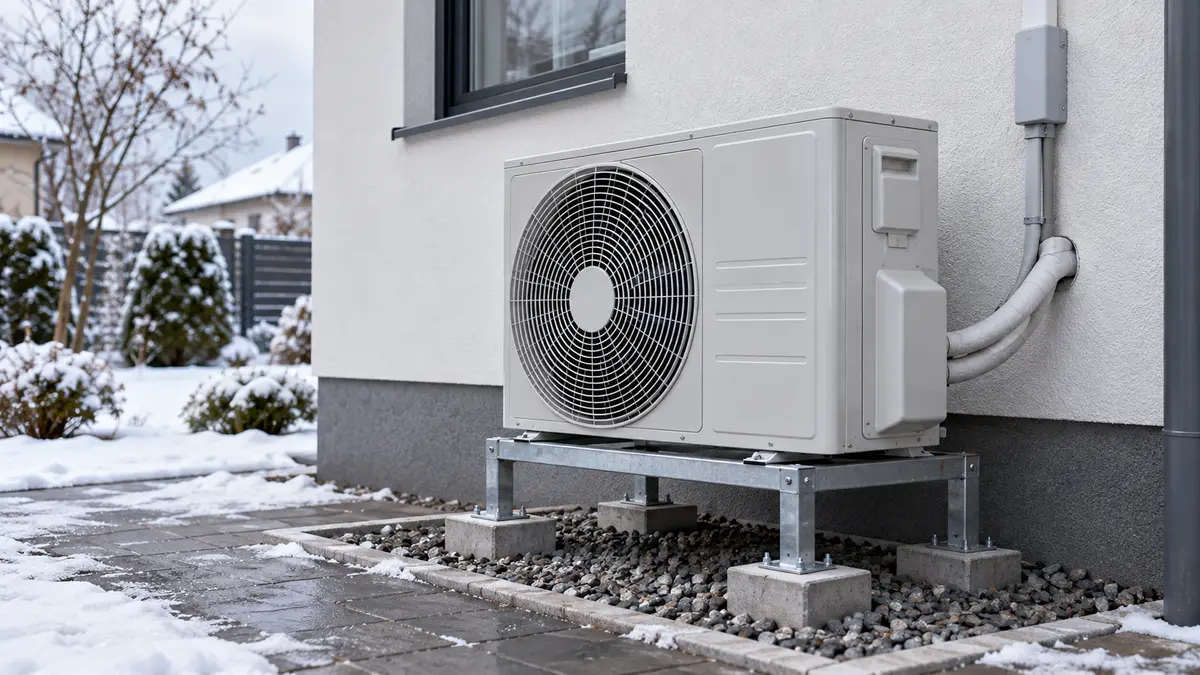
Cold-weather operation also involves defrosting. Under suitable temperature and humidity conditions, frost forms on the outdoor heat exchanger. The system periodically removes it, temporarily interrupting or reducing normal heating delivery. The resulting water needs somewhere safe to go without building up as ice around the appliance or across a walkway.
Some models include additional cold-weather provisions, but the details are model-specific. Ask about the outdoor-unit base, drainage arrangements and any heaters used to protect components or manage water.
A system selected mainly for summer cooling may be perfectly satisfactory for occasional heating. A system intended as the main winter heat source needs a more demanding assessment, including whether supplementary heating is necessary.
Look at airflow and noise together
A room can reach the desired temperature and still feel uncomfortable if a strong stream of cold air crosses the sofa, desk or bed.
The indoor unit needs a position that allows air to circulate through the occupied space without directing the main discharge continuously at people. Adjustable louvres help, but they cannot fully compensate for a poor location. A unit squeezed above a tall wardrobe may also have restricted intake airflow and awkward filter access.
Noise figures require similar care. A prominently advertised value around 19–20 dB(A) may refer to the indoor unit’s quietest setting, not its output while cooling a hot room. Read the figures for several fan speeds and check whether quiet operation limits available capacity.
Also distinguish sound pressure from sound power. Sound pressure depends on the measurement position and acoustic surroundings. Sound power describes the source’s overall acoustic output. Both may be expressed in decibels, but their numerical values are not directly interchangeable.
For a bedroom, low fan noise, controllable airflow and the ability to dim or switch off the display may be more useful than a long collection of smart features. For the outdoor unit, mounting quality and location matter too: vibration transmitted into the building can be more intrusive than expected from a brochure.

Choose useful controls without confusing cooling with air purification
A clear remote control, dependable timer and straightforward fan adjustment deserve attention. Wi-Fi can be convenient for preparing a room before you return home, but check whether the required module is included or optional. It is also worth confirming that ordinary operation remains possible without an app or internet connection.
Humidity control needs a little interpretation. Cooling can remove moisture as water condenses on the indoor heat exchanger. A “dry” mode changes how the appliance operates to favour dehumidification, but its behaviour varies between models. It should not automatically be treated as a substitute for a dedicated dehumidifier, particularly in an already cool room.
Air-cleaning claims are another area where modest expectations help. A washable mesh filter catches larger airborne particles and protects the appliance, but it does not make every split system equivalent to a high-performance air purifier.
For additional filtration or electronic cleaning features, look for clear information about what is being removed, under which conditions, and how much room air is actually treated. A laboratory percentage without context tells you little about everyday performance.
Above all, ordinary split-system cooling does not replace ventilation. Unless the model explicitly includes a fresh-air function with the necessary installation, the room still needs a separate means of exchanging indoor and outdoor air.

Plan the installation before paying for the appliance
Installation should be part of the buying decision, not a problem to solve after delivery.
The outdoor unit needs structural support, service access and the clearances specified by its manufacturer. An enclosed glazed balcony is not automatically a suitable location: the appliance must exchange heat with outdoor air rather than repeatedly drawing in air it has already heated during cooling.
In an apartment building, establish what permissions or restrictions apply to the façade, balcony and drainage route. Also consider the effect on nearby windows and neighbours, rather than choosing the shortest pipe run at any cost.
Inside, condensation water must drain reliably. A gravity drain needs a suitable continuous fall. Where that is impossible, a condensate pump may be needed, adding another component that can require attention and may produce audible noise. The route should not discharge water where it causes nuisance or damage.
Have the electrical supply assessed against the exact model’s requirements. The installer or electrician should confirm circuit capacity, protective devices, earthing and isolation arrangements. A conveniently located socket or extension lead is not evidence that the electrical installation is suitable.
Ask for a written quotation that makes the scope clear: the matched equipment, pipework allowance, brackets or stand, wall penetration, drain, electrical work and commissioning. Longer pipe runs, difficult access and additional refrigerant can change the final cost, while permissible pipe lengths and height differences depend on the model.
Commissioning is more than switching the system on. It includes the manufacturer’s required checks, leak testing and evacuation of the pipework to remove air and moisture. These are jobs for a suitably qualified installer.
The refrigerant specification also belongs in this discussion. R-32 has a lower global-warming potential per kilogram than R-410A, but that does not by itself establish the appliance’s efficiency. R-32 is mildly flammable, so the relevant installation and room-size requirements must be followed. Refrigerants are not interchangeable, and refrigerant handling is not a household maintenance task.
Think about maintenance and support before extra features
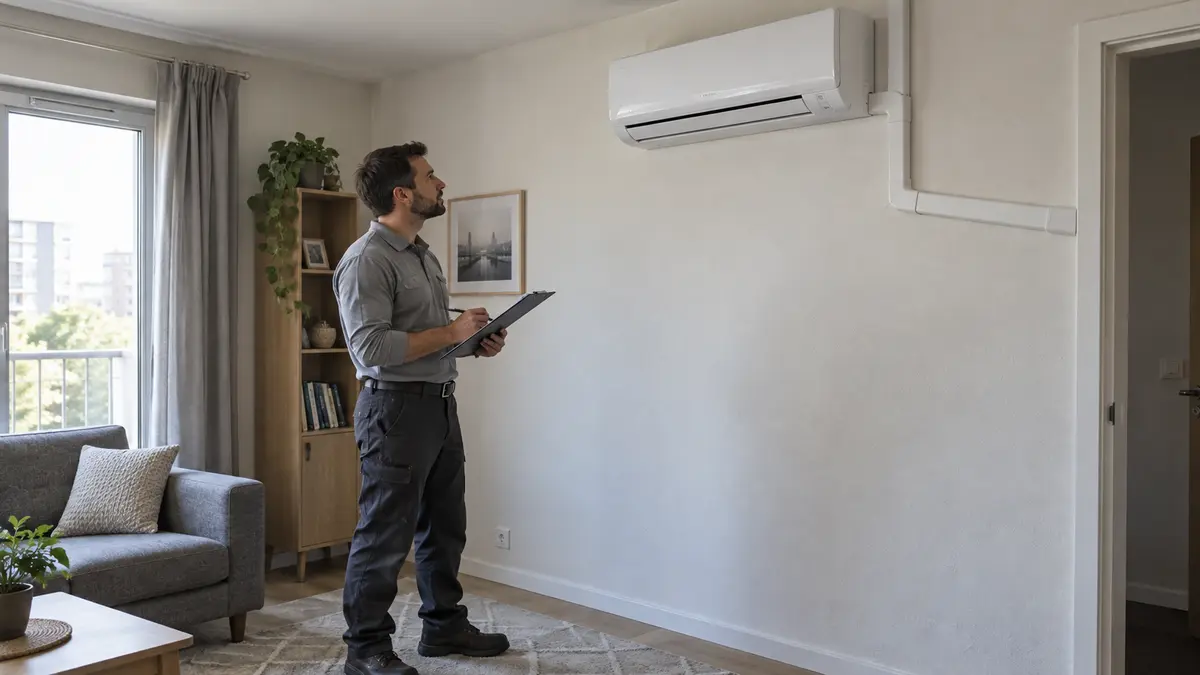
A filter that is easy to reach is more useful than one you avoid cleaning because the unit sits above an inaccessible cupboard.
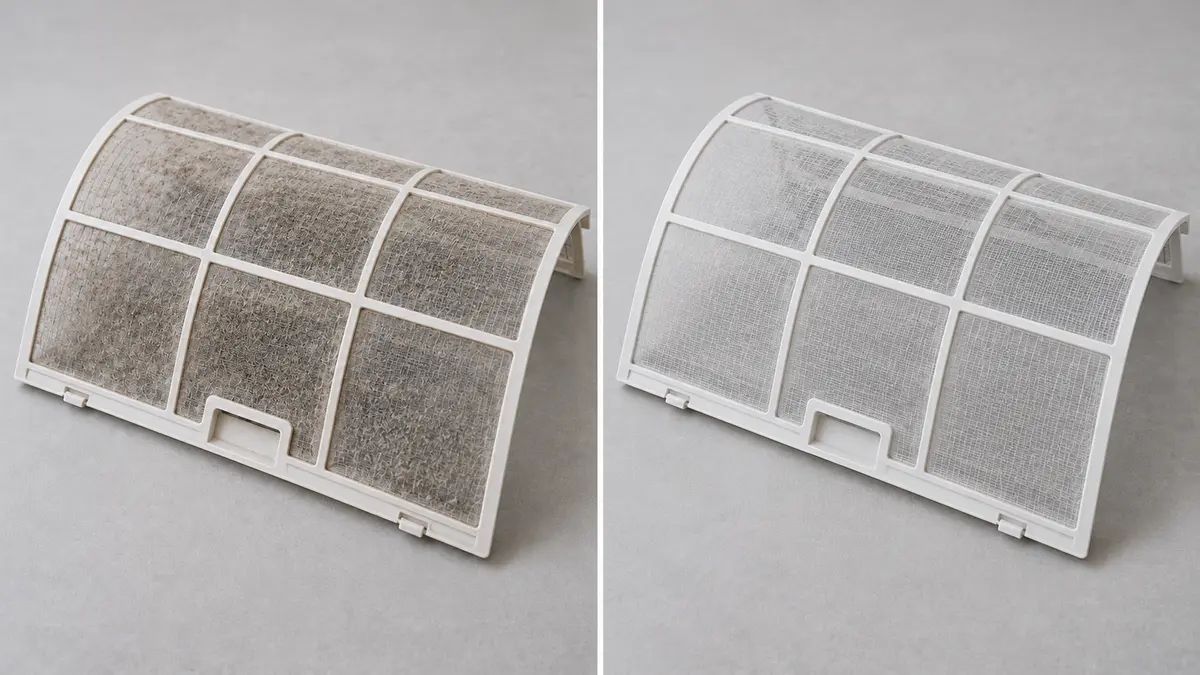
Follow the manufacturer’s cleaning instructions and interval, adjusting attention to actual dust and use. Only wash filters intended to be washable, isolate the appliance as instructed before handling them, and allow washed filters to dry fully before refitting. Fine filters or treatment cartridges may have different replacement requirements.
Cleaning the accessible filter does not replace professional attention to the heat exchangers, fan, drain and refrigerant circuit. A system that begins leaking water, smelling persistently unpleasant or cooling poorly needs investigation rather than repeated changes to the temperature setting.
Before buying, ask who provides service locally and whether replacement parts are available. Read the warranty conditions for the whole system, not just the compressor. Establish whether labour, call-outs and installation-related issues are included, and which maintenance records may be required.
These are less visible advantages than a glossy front panel, but they become important when the appliance needs attention several summers later.
Bring the specifications back to your room
Imagine a hypothetical 12,000 BTU/h inverter system with SEER 7, an average-climate SCOP of 4, a minimum indoor sound-pressure figure of 20 dB(A) and an advertised heating limit of −20°C.
Those specifications provide a useful starting point, but they do not complete the decision. For a shaded bedroom, minimum cooling output and comfortable night-time airflow may be decisive. For a home relying on winter heating, low-temperature capacity matters more than the operating-limit headline. In either case, an unsuitable installation can undermine an otherwise attractive appliance.
Choose the system that matches the actual room and operating pattern, then compare efficiency, comfort and the complete installed cost. More capacity, more functions and a higher purchase price only help when they solve a real need.
You can explore split air conditioners on IVO with these distinctions in mind, checking the exact equipment supplied and discussing the installation before making the final choice.